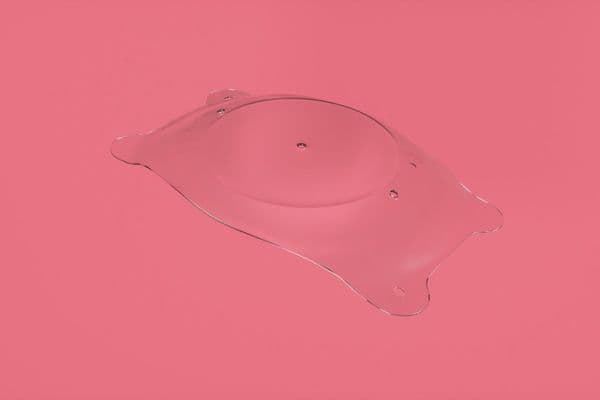
Patients who have the Hydrus microstent inserted are significantly less likely to undergo secondary incisional surgery and over 70% remain free of medications three years after receiving the device, clinical trial results show.
Announcing three-year results from the US Food and Drug Administration (FDA) clinical trial, Hydrus microstent developer Ivantis said key findings included:
- 73% of Hydrus microstent patients remained medication-free compared to 48% in the cataract-only arm, still the highest margin of total medication elimination compared to control of any MIGS pivotal trial.
- Among patients who entered the study on one medication, 81% remained medication-free compared to 48% in the cataract-only arm.
- An 85% reduction in patients who went on to subsequent invasive surgery to control glaucoma (only 0.6% of Hydrus microstent patients compared to 3.9% in the cataract-only arm).
- The overall safety profile was similar to cataract surgery alone, including endothelial cell density (ECD) stability from year two to year three, with no significant change between the Hydrus microstent group and cataract surgery group.
The Hydrus microstent was approved by the FDA for use in the US in August 2018.
The HORIZON study is the largest prospective, randomised, controlled trial conducted to date for a MIGS device, and the first to have a global span. The study included 556 patients and was conducted at 38 centers in nine countries in North America, Europe, and Asia. It was designed to demonstrate the safety and effectiveness of the Hydrus microstent in lowering intraocular pressure (IOP) in glaucoma patients undergoing cataract surgery.