Increasing the number of Māori entering eye health professions is the aim of a collaboration between the University of Auckland School of Vision Science (SOVS), Toku Eyes and the Te Whe pilot programme for Year 10 rangatahi (young people).
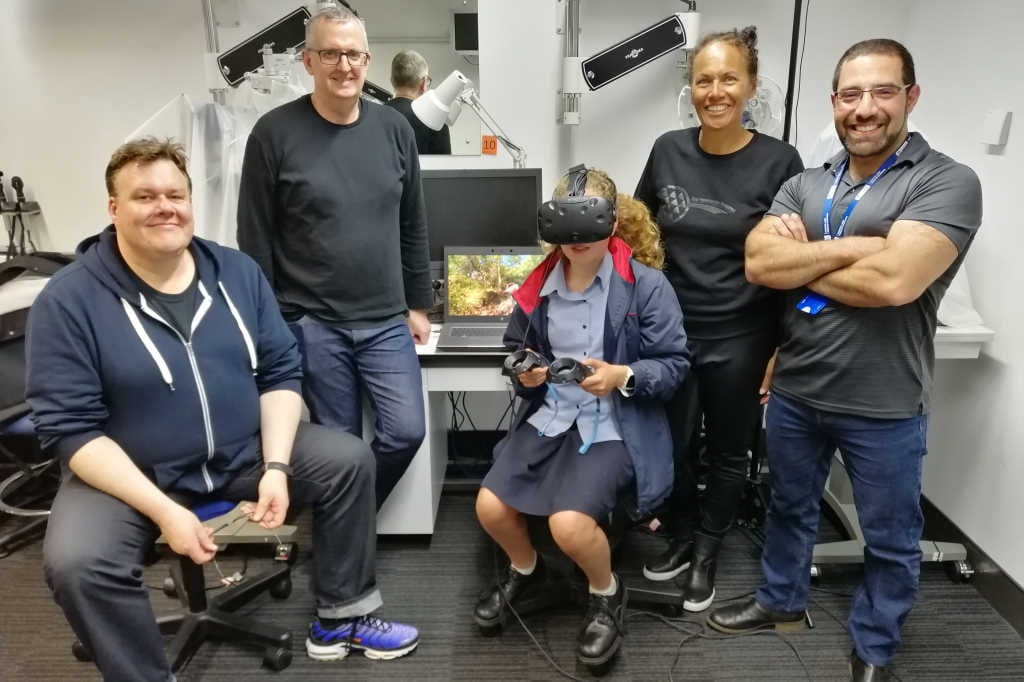
Senior optometry lecturer and co-founder of Toku Eyes, Dr Ehsan Vaghefi recently hosted 30 Māori students from across Auckland. With the help of Drs Jan Kruse and Gregory Bennett from AUT Vision Lab and SOVS clinicians, he gave teenagers a high-tech taste of what the world of optometry entails.
State-of-the-art virtual reality (VR) equipment, developed by Dr Vaghefi and ophthalmologist Dr David Squirrell’s novel ophthalmic imaging device venture Toku Eyes and the AUT team, enabled users to experience various eye conditions in a range of different virtual environments. The technology gave students first-hand experience of vision issues caused by eye disease in a relatable, fun way, said bioengineer Dr Vaghefi.
Dr Vaghefi linked up with the Te Whe programme to use this technology to encourage more Māori students to consider careers in eye health, he said. “As a programme, we are striving for more students from Māori backgrounds. I believe that getting young people engaged, by using innovative technology is the key. It’s important for us to inspire Māori students to take up careers in vision health and we need to achieve this by high quality engagement.”
Students enjoyed a video presentation on basic functions of the eye and effects of eye disease before a VR experience, lunch and a lecture. Year 10 student Kassidy Allot was among many students who were inspired, particularly enjoying the VR experience. She said, “It’s amazing to get to see what it looks like when you have an eye disease and how that might feel in real life. It was so cool!”