Central Tokyo seemed a fitting location for the 17th International Myopia Congress (IMC), bringing delegates from across the world to the Japanese capital before the wider eyes of the world focused on the country for the Rugby World Cup.
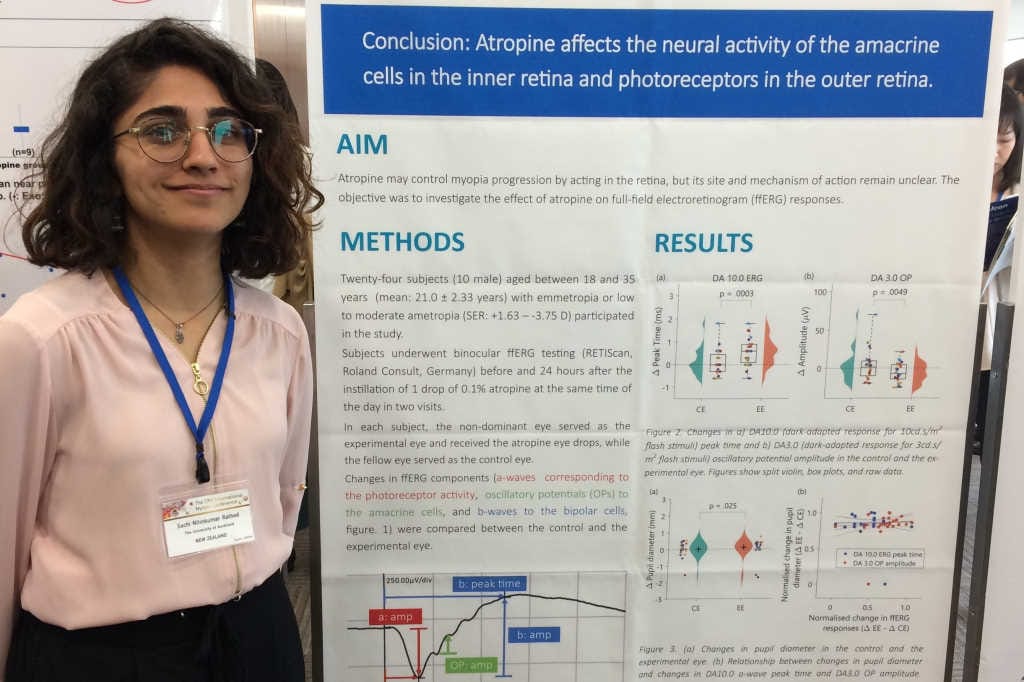
Ten oral sessions were held covering myopic prevalence, progressions, biometric changes through accommodation, pharmacology, pathologic myopia and more. And, unlike my usual continuing education digest, at this scientific research meeting, the presenters were mostly authors of their own research and fielded questions from the astute community of over 800 delegates at the forefront of myopia research.
Keynote presenter was Zeiss Young Investigator Award in Myopia Research recipient, Dr Virginie Verhoeven, who spoke of the growing numbers of genetic loci identified for refractive error and myopia. These loci will hopefully lead to a gene that influences eye growth, with a possibility to block that pathway and stop or control eye growth, she explained.
Genetics is an area with new developments in data collection. Biotechnology company 23andme asked its large database of DNA-mapped customers their first spectacle wearing age. These results were combined with findings from the Consortium for Refractive Error and Myopia (CREAM) in a GWAS meta-analysis, identifying 161 common variants for refractive error and were presented to delegates.
Environmental risk factors are always the subject of research presented at IMC and further confirmation was presented on the benefits of outdoor exposure, with an astounding video of Beijing schoolchildren jogging in neat lines around a field. This activity lasted for 30 minutes, every school day, over a year. Unfortunately, the benefits of this activity on rates of myopia rebounded three years later.