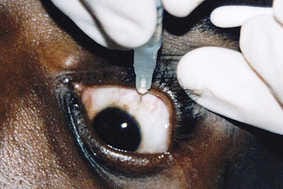
A Johns Hopkins Medicine study of 106 patients with wet (neovascular) age-related macular degeneration (nAMD) has found a third of patients could cease intravitreal (IVT) injections without further vision loss.
Calling the discovery “a dramatic departure from current strategies that require indefinite treatment”, the study authors employed a treat-and-extend-pause/monitor (TEP/M) regimen to assess if nAMD patients could be weaned off anti-vascular endothelial growth factor (anti-VEGF) therapy. Proteomic analyses of aqueous fluid (obtained at the time of treatment initiation) were used to compare patients requiring monthly treatment with those requiring less frequent treatment. Within the first year, 31% of patients were weaned off IVT injections (defined by researchers as not requiring treatment on three consecutive scheduled visits and for at least 30 weeks from their last injection) and 38% of patients by the end of year two.
Writing in The Journal of Clinical Investigation, the study’s authors, led by Associate Professor Akrit Sodhi, also said aqueous biomarkers could help identify patients with nAMD who may not require long-term anti-VEGF therapy. It is speculated that oxidised apolipoprotein-B100 (ApoB100), a principal component of drusen implicated in the progression of non-neovascular AMD, may contribute to the development of dry AMD and the progression to wet AMD, they wrote. “However, our results suggest ApoB100 may also play a novel and paradoxical protective role in (wet) nAMD.”