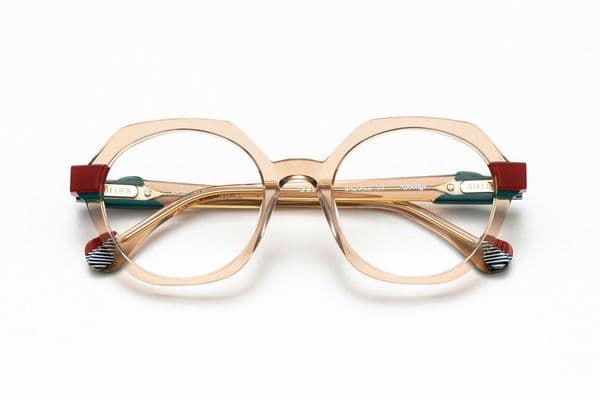
SightGlass Vision has announced new clinical data showing that its Diffusion Optics Technology (DOT) spectacle lenses for myopia control saved an average of more than 1D of progression in children aged 6–10 years, after two years.
Presented at the ARVO 2026 Annual Meeting, the findings build on previously reported 12-month Cathay study data and affirm that DOT lenses with contrast management deliver strong and consistent efficacy in Chinese children aged 6–10 years.
Across the full study population of patients in China aged 6–13, the lenses slowed average myopia progression by 0.78D (a 67% reduction) and average axial length progression by 0.40mm (a 62% reduction) after two years of wear, compared with the control group.
Unlike defocus-based solutions, DOT lenses are designed to reduce retinal contrast signalling through the incorporation of light-scattering elements. The Cathay two-year results supplement the existing clinical research supporting DOT lenses’ contrast-management approach for myopia control.
Additional findings from the full study population showed that 59% of DOT lens wearers had 0.50D or less myopia progression after two years, compared with 19% of children in the control group. The difference was statistically significant (p<0.0001).
Building on its four-year North American Cypress study, SightGlass Vision initiated the Cathay trial to compare DOT lenses with conventional single-vision lenses and to evaluate their continued safety and efficacy in Chinese children across five clinical sites in China. A total of 172 myopic children aged 6–13 completed the second year of the study.
Other research presented at ARVO 2026 further expanded the understanding of DOT lens performance and wearer experience. ‘Pupil size effect on myopia progression with contrast modulation spectacle lenses’ (Webley D, et al, 2026) found no significant association between pupil size and the rate of myopia progression in children wearing DOT lenses at 12 months. In addition, ‘Viewing behaviour with contrast modulation spectacle lenses’ (Kollbaum P, et al, 2026) showed that children exhibited similar viewing behaviour when wearing both DOT lenses and single-vision lenses across a range of daily activities.
SightGlass Vision’s DOT lenses are available in China, Canada, Israel, Spain and the UK. Founded in 2016, the company now operates as a joint venture of CooperVision and Essilor International.