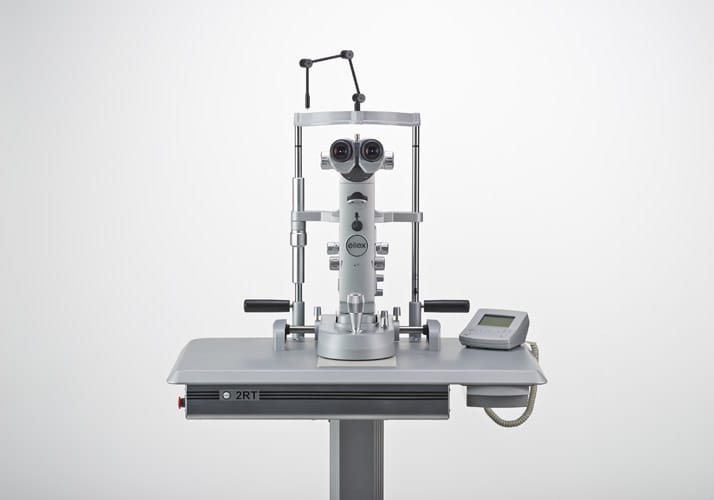
Results of an Australian clinical trial show a four-fold reduction in the rate of progression to late stage AMD in 76% of intermediate age-related macular degeneration (iAMD) patients who received Ellex 2RT laser treatment over the 36 months of the study.
Principal investigator, ophthalmology Professor Robyn Guymer says, “While this isn’t a cure, and it is not suitable for every patient with AMD in its early stages, the impressive outcomes in reducing progression to late AMD are important as this is the first time that a laser intervention has shown promise in addressing AMD disease progression in more than 20 years of AMD laser research.” Ellex 2RT is a non-thermal laser therapy which the manufacturer says stimulates a natural, biological healing response in the eye.
Although Guymer said the primary endpoint of the trial was not met, post hoc analyses showed that intervention with Ellex 2RT in patients who did not have coexistent reticular pseudodrusen (RPD) at the start of the trial (76% of patients enrolled), resulted in a significant treatment effect (p=0.002) and a clinically meaningful 77% reduction in the rate of progression from iAMD to late AMD versus placebo.
Prof. Guymer, who is also deputy director at the Centre for Eye Research Australia (CERA) in Melbourne, commented further, “Based on our findings from the LEAD trial, new multimodal imaging techniques offer the ability to better stratify and monitor progression of AMD patients. This is an important consideration for earlier-stage interventions such as Ellex 2RT, where patient vision is largely unaffected. Traditional outcome measures, including best corrected visual acuity (BCVA), do not adequately capture AMD disease status.”
The study, published in Ophthalmology, says the presence of RPD is a key biomarker of retinal pigment epithelium (RPE) dysfunction and has a high association with progression to late-stage AMD. Unlike regular drusen deposits, which are located between the RPE and Bruch’s membrane, RPD are located above the RPE and are often associated with late AMD. The 24% rate of prevalence of RPD at baseline in the LEAD trial was based on a definition that required at least five RPD to be present in the eye.