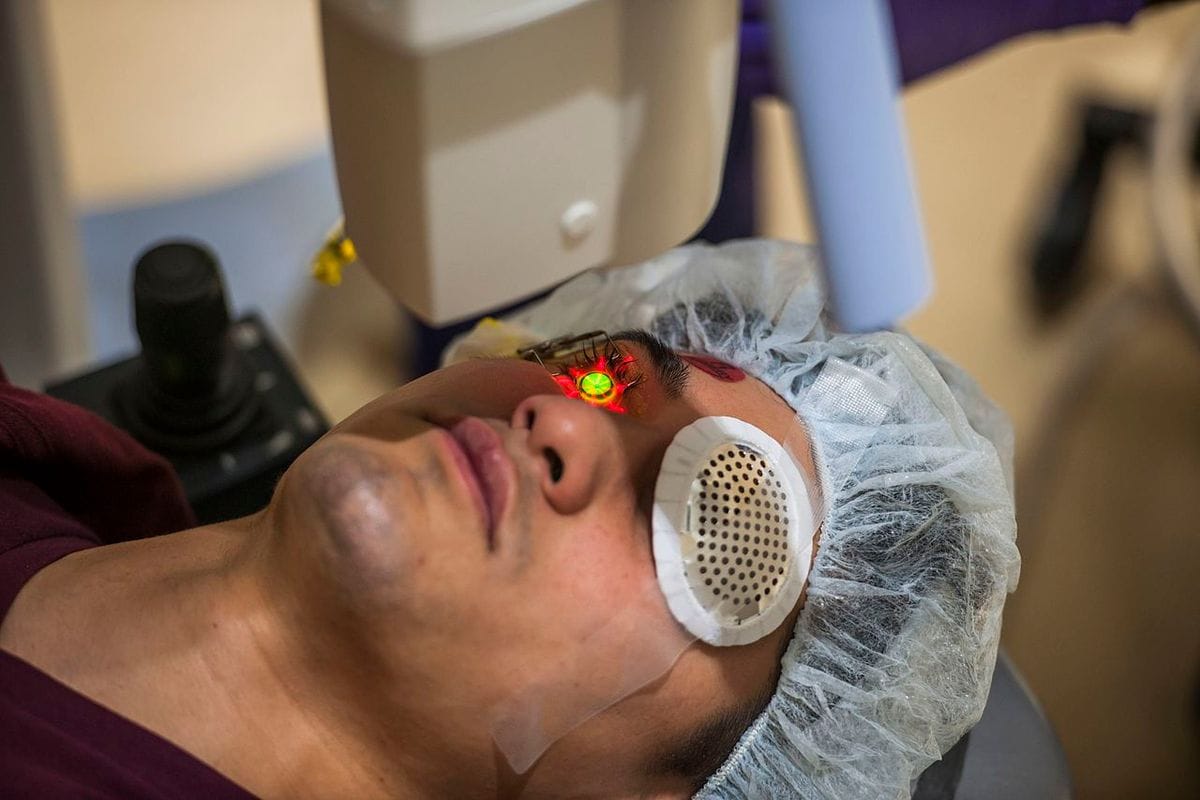
A new “Tel-Aviv” protocol for customised-laser ablation combined with corneal collagen cross-linking provides good visual acuity improvement while halting keratoconus progression, according to a poster presented at the winter meeting of the European Society of Cataract and Refractive Surgeons (ESCRS).
Corneal collagen cross-linking (CXL) is the gold standard for treating progressive keratoconus, however, the conventional CXL procedure has a limited effect on vision and existing protocols addressing this issue by combining CXL and refractive techniques, such as the Athens and Cretan protocols, have the disadvantage of leading to significant corneal thinning, refractive surgeon Dr Michael Mimouni told Healio. “The idea of the Tel-Aviv protocol is to halt progression and improve UCVA and BCVA while leading to as little corneal thinning as possible.”
Results from a study of 131 patients showed the Tel-Aviv protocol resulted in improved visual acuity and more flattening of the cornea compared with standard CXL, with only 15 µm more thinning.
Dr Mimouni suggested the Tel-Aviv protocol, developed by Igor Kaiserman, should be considered for patients with progressive keratoconus and corneas above 430 µm.