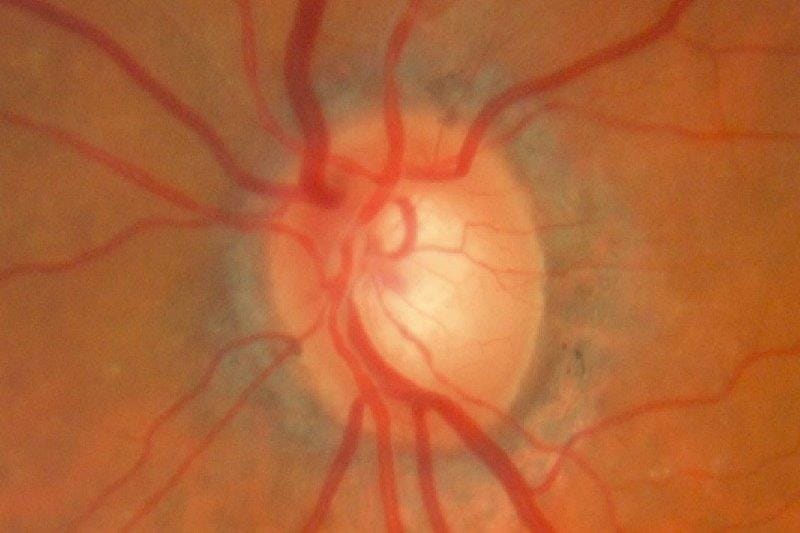
A US study demonstrated elevated flavoprotein fluorescence (FPF) in optic nerve mitochondria can indicate early glaucoma, with researchers saying their method could be a more accurate diagnostic tool than visual field testing.
When mitochondria are oxidatively stressed, their FPF increases. In the optic nerve, this eventually leads to tissue damage, causing diseases such as glaucoma and macular degeneration, reported researchers from the New York Eye and Ear Infirmary of Mount Sinai (NYEE). This is the first comprehensive study to look at FPF changes in the optic nerves in patients with different stages of glaucoma compared with healthy eyes, they said.
The NYEE research team analysed 86 eyes using a fundus camera that isolates fluorescence. Fifty eyes had glaucoma, based upon thinning of the retinal nerve fibre layer, and 36 had no disease. FPF was significantly higher in glaucomatous eyes compared to normal eyes, especially in early-stage cases where damage is difficult to detect. FPF levels also correlated with visual field mean deviation, visual field pattern deviation and retinal nerve fibre layer thickness.