The biennial Retina International World Congress was held for the first time in Auckland on the 10 and 11 February. With recent host cities including Taipei and Paris, Auckland had a lot to live up to!
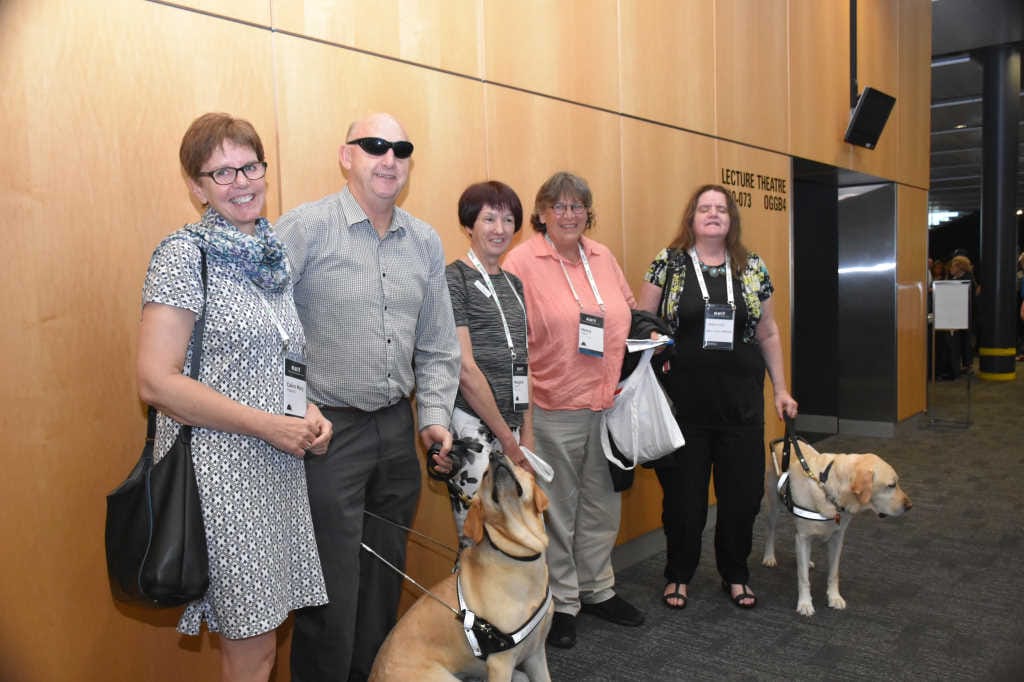
The Retina International Congress is a unique meeting, bringing together the world’s foremost retinal scientists and clinicians, patients and their families, health professionals and patient advocates. The scientific programme, organised by local retina specialist Associate Professor Andrea Vincent, boasted an incredible line-up of 11 international speakers as well as many local and national presenters. The speakers and delegates were joined by a large group of volunteers, from the Blind Foundation and the University of Auckland, to assist the many low-vision or blind delegates.
Speaking to such a diverse audience was always going to be a difficult task, but the speakers more than rose to the challenge. The scientific programme was opened by Professor Elise Héon, from the University and Hospital for Sick Kids in Toronto, who gave a brilliant clinical overview of inherited retinal disease, putting into context much of what was going to be discussed at the meeting. This was followed by a presentation by Professor Eric Pierce, from Harvard Medical School, summarising the genetic causality of inherited retinal diseases and current therapeutic approaches for treating these conditions. Both opening speakers spoke of the difficulties associated with the current inherited retinal disease nomenclature; many disease names (for example, retinitis pigmentosa) cover a range of genetic mutations and phenotypes.
The second session of the day covered the somewhat daunting topic of Genetics and Gene Therapy. A/Prof Andrea Vincent, outlined the clinical findings that can provide clues to the genetic diagnosis in inherited retinal disease, while Associate Professor Alex Hewitt (Tasmania) provided an overview of the advances in genetic testing for retinal disease. He included a memorable analogy, where each DNA nucleotide was a matchstick, explaining how changes in the ‘matchstick’ configuration can lead to genetic disease. Professor Jean Bennett, from the University of Pennsylvania, then took to the stage to discuss the enormous amount of work that goes into conducting a clinical trial, and the phenomenal costs involved (up to US$1.8 billion if conducted by a pharmaceutical company!).
In the afternoon, the meeting broke off into two parallel sessions, ‘Retinal degenerations’ and ‘AMD and other maculopathies’. I attended the AMD session and one of the highlights was Professor Mark Gillies from Sydney discussing the Australian Fight Retinal Blindness project and the role of big data. He emphasised the importance of natural history disease studies - by understanding the course of disease in individuals, we are able to gather information that cannot be acquired through clinical trials alone.