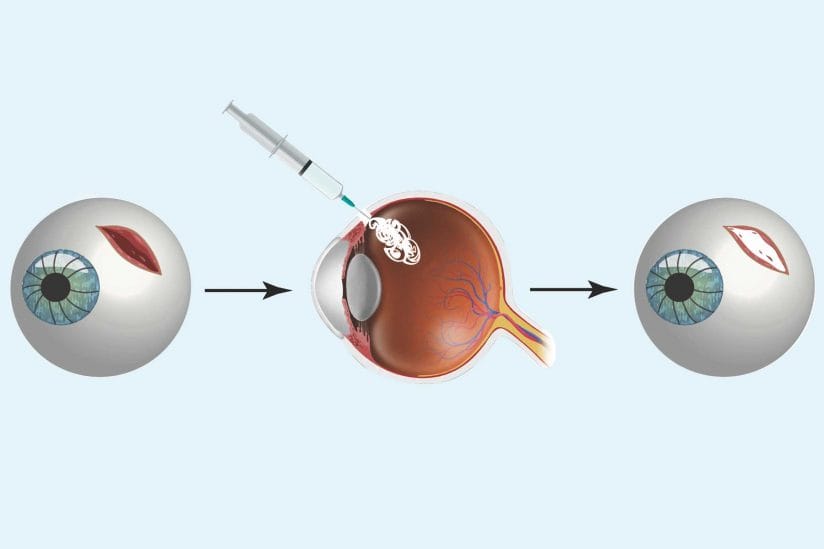
University of Southern California (USC) scientists have developed an on-the-spot, temperature-sensitive hydrogel and special syringe that can quickly seal eye injuries on the battlefield or in emergency situations.
The reversible, temperature-sensitive temporary seal changes from a fluid to a super-strong semi-solid when applied to the eye and can be removed by adding cool water once the patient reaches hospital.
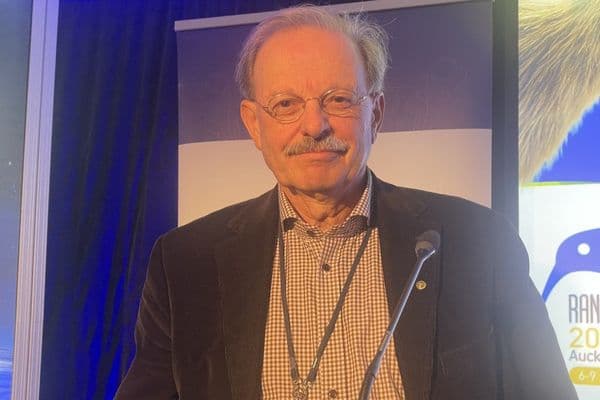
“If you look at historical data over the last several decades, the rate of war-related ocular injuries has steadily increased from a fraction of a percent to as high as 10-15%. Some of that can be attributed to changes in warfare, especially with the use of improvised explosive devices,” said lead researcher John Whalen, assistant professor of research ophthalmology at the USC Roski Eye Institute and member of the USC Institute for Biomedical Therapeutics. “When the US Department of Defense asked the scientific community to develop novel approaches to treating ocular injuries, we immediately thought of an advanced material we had previously worked with as a possible adhesive for a retinal implant.”
The material the group was working with for retinal implants was a hydrogel called PNIPAM, poly(N-isopropylacrylamide), which had a unique attribute that made it a natural fit, said Whalen.
The research team has also developed a special syringe for the hydrogel that would be easy to use on the front lines and capable of quickly cooling the hydrogel before application. The syringe has a cooling chamber filled with calcium ammonium nitrate crystals — the type used in instant ice-cold packs. By adding water to the chamber, the crystals activate and cool the hydrogel to operating temperatures within 30 seconds.