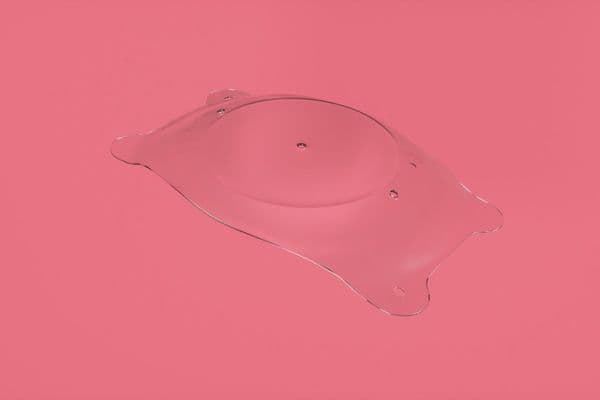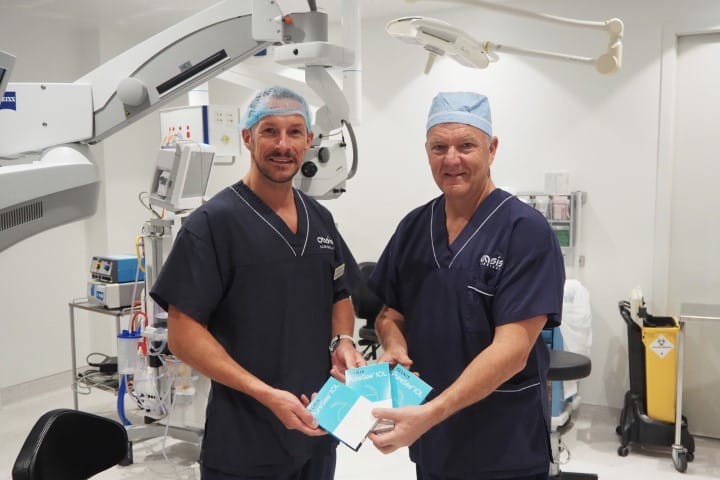
In an Asia-Pacific official first, refractive surgeon Dr Dean Corbett performed a successful bilateral implant of Johnson & Johnson’s (J&J’s) new extended depth of focus (EDOF) intraocular lens (IOL) PureSee on a husband and wife at the Oasis Surgical clinic in Auckland.
The procedure was done under topical anaesthetic, so the patients were able to see straight away, said Dr Corbett. “Walking out of the practice one hour after surgery, they were both legal to drive with two lines in reserve.”
Dr Corbett, who was one of the first ophthalmologists to implant the Tecnis Symfony IOL nearly a decade ago, led a proof-of-concept study trialling the new PureSee IOL over the past 12-18 months. An extension of the popular Eyehance IOL, PureSee represents a new market entry for J&J in non-diffractive EDOF IOLs without significant dysphotopsias, said Dr Corbett.
It probably offers the greatest depth of focus of any similar product, he said. “The non-diffractive EDOF IOL technology is a market that is really growing and this is the latest IOL ‘flavour’. PureSee will add a lot in this space without any downsides, offering a greater range of vision and predictability of refractive outcome.”
Comparing PureSee to Rayner’s RayOne enhanced monovision (EMV) IOL, which was released commercially earlier this year, Dr Corbett said it’s too early to comment on which lens works better for which patient. For now, PureSee is on a limited market release until it launches commercially next year with a full range of IOLs, including toric, he said. “Lining up these two products I think it’s going to be a very close race. It's certainly nice to have two different platforms to investigate. Moving forward, it will be important to compare outcomes to help people make the best decision, in which price can be a factor as well.”