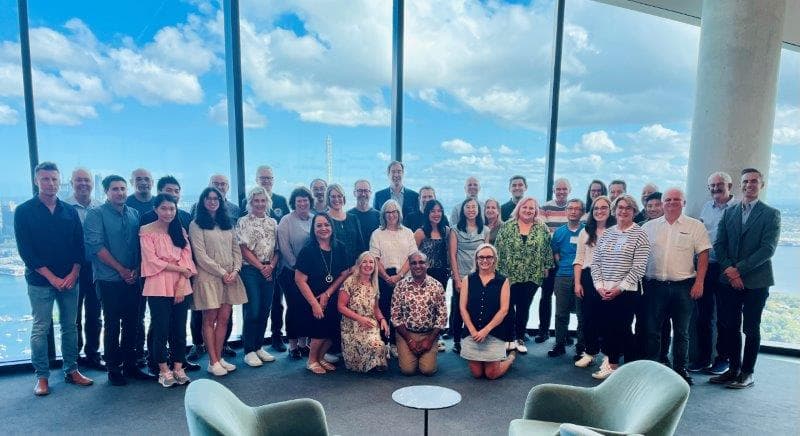
EssilorLuxottica’s key New Zealand-based independent practice customers were invited to the company’s new Australasian headquarters for a heart-to-heart about the company’s completed merger, future direction and what this all means for them.
Against a backdrop of jaw-dropping, near-360° views across Sydney, from the heady heights of the 34th and 35th floors of EssilorLuxottica ANZ’s offices in North Sydney, the company’s senior management team discussed lenses, frames and where each part of the group sits in relation to one another. This included some tricky questions about how the company’s relationship with its key independent customers, many of whom have been with Essilor for years, compared to the company’s arrangements with its optical chain, OPSM.
Talking openly about the different relationships within the organisation, ANZ general manager, wholesale, Marco Caccini acknowledged some OPSM stores also have access to some of its high-end lens products, including its Varilux range and its new myopia-management lens Stellest, while others, such as Bailey Nelson and Optometrist Warehouse, do not. Who gets what is driven by which part of the business the chains work with to source their lenses, where the stores are based, their retail style and offering and their staff knowhow, he said. High-end lenses, such as Stellest, require a high degree of professionalism, knowledge and training to effectively diagnose, fit and dispense, he said, so are often better suited to independents. “We offer all the brands, products and technology we think are appropriate for that channel but then we also have a service strategy, which is at the base of our partnership programme with independents.”
This strategy also applies to its frames, said Caccini, with deals to be done when and only if it makes commercial sense. “Frames are by definition a selective distribution, so it needs to make sense for the independent and their competitive territory… their value proposition. It’s a balance we have to play.”