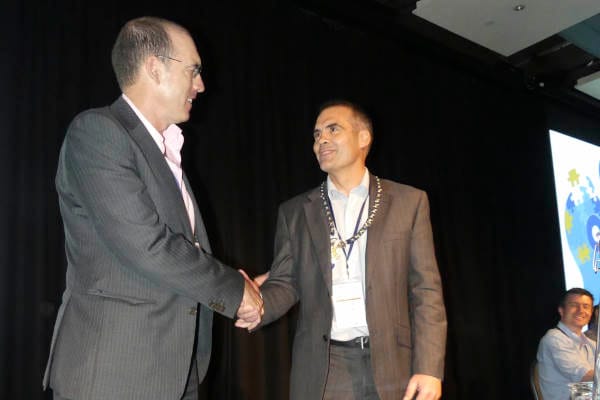
The New Zealand Branch conference was another great success this year, with Auckland’s Pullman Hotel proving an excellent choice in the heart of the city.
The conference was ably run by this year’s convenor, Dr Leo Sheck, and his organising committee. Thank you also to Professor Charles McGhee and the scientific committee for another excellent scientific programme.
The theme, A brave new world or a world in crisis, provided for a lot of emphasis on technological and administrative innovation as well as collaboration with other health professionals. It was, therefore, an excellent addition to the programme to have John Cooper from Manchester, the keynote speaker for the ophthalmic nurses meeting, presenting not only to the nurses but also to the whole group. Cooper discussed how an enthusiastic and diligent nurse-led service produced such dramatic improvements in Manchester’s access to timely and high-quality temporal artery biopsies. The programme also featured other engaging and thought-provoking sessions from a range of excellent speakers, including our overseas ophthalmic invited speakers, Professors Adnan Tufail (UK), Gerard Sutton (Australia) and Keith Martin (Australia).
This was also the first conference to have named lectures, honouring Dr Dorothy Potter and Professor John Parr, two of New Zealand’s most remarkable and influential resident ophthalmologists. Hopefully, the example of their careers will inspire ophthalmologists of current and future generations to build on these foundations and advance our profession yet more.
The New Zealand Branch conference is also an important forum to discuss where we think the College should be heading, so we were delighted to also have Dr Heather Mack, our College president, join our meeting. Ophthalmology in New Zealand faces numerous problems and numerous opportunities, including inequity of service across the country and ever-increasing numbers of referrals on top of continuing backlogs. But, as this conference highlighted, there are a number of areas where changes may well impact us in a positive way, including the use of artificial intelligence to grade diabetic retinopathy and the increasing role of our health practitioner colleagues, particularly nurses, in delivering services to patients in our DHBs.