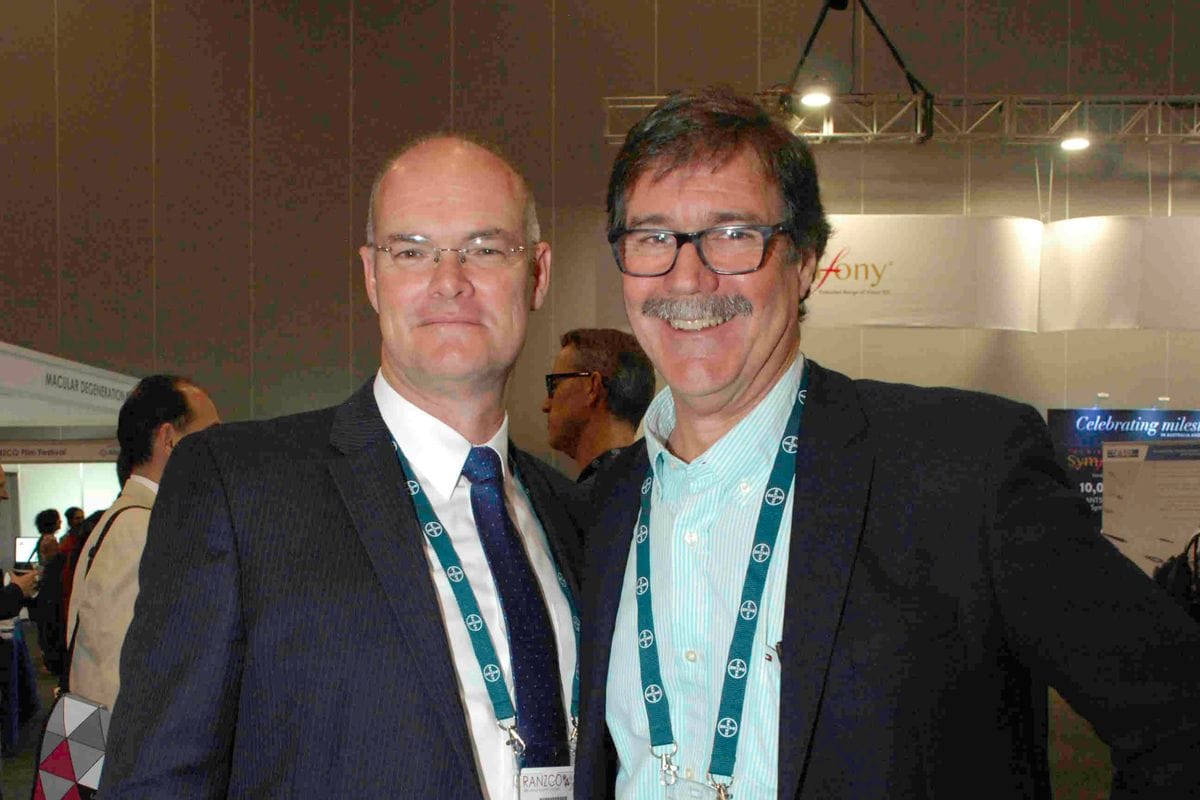
RANZCO’s 2016 Scientific Meeting opened on a comical note as outgoing President Dr Brad Horsburgh told the audience it wasn’t a good time to have an eye problem in the region as 85% of Australasia's ophthalmologists were in Melbourne for the conference. But the humour quickly turned to more serious matters with the somewhat controversial (for some optometrists anyway) new clinical referral guidelines from RANZCO being thrust front and centre into the opening speeches.
The new guidelines represent a default standard of care for the whole eye care profession, said Dr Horsburgh, a language by which ophthalmology will engage with optometry and general practice. “It is a branding strategy, undoubtedly…we want to be the Microsoft of ophthalmology; we want to be the default language that everyone uses, the default standard of care.”
RANZCO launched the first of its planned series of referral guides for optometrists and GPs, on glaucoma management, in July last year. Two further “Referral Pathways” for diabetic retinopathy and age-related macular degeneration were released just prior to the RANZCO conference in November to coincide with training on the guidelines for optometrists and GPs at the conference.
Initially the guidelines are being reviewed in a two-year pilot study in partnership with Specsavers. Though RANZCO says feedback from other optometrists has on the whole been positive and is welcome, it also says at this stage it doesn’t have the ability to collate and assess data from multiple sources, all using different assessment equipment and techniques and software systems, though it recognises these differences will need to be considered in the longer-term to ensure the referral guidelines are accepted by the eye care profession as a whole.
Unhappy about being left out of the design of the referral guidelines, Optometry Australia (OA) issued a stinging rebuke about the glaucoma guidelines in a statement in October saying the guidelines failed to reflect the diversity of optometry expertise, clinical circumstances and scope of practice in Australia. “The RANZCO referral pathway instead encourages potentially unnecessary referrals and an increased burden on Medicare, as well as an unnecessary financial burden for patients in clinical, travel and time-related costs,” said OA National President Kate Gifford in the statement. “The pathway appears to be more compatible with practice in the UK and omits gonioscopy from the standard baseline examination, which is an entry-level competency in Australia.”