The first of the two-repeated autumn seminar evenings by Retina Specialists was held on 6 March in the leafy Auckland suburb of Parnell. Attending optometrists were greeted by the Retina Specialists team, wine and canapés.
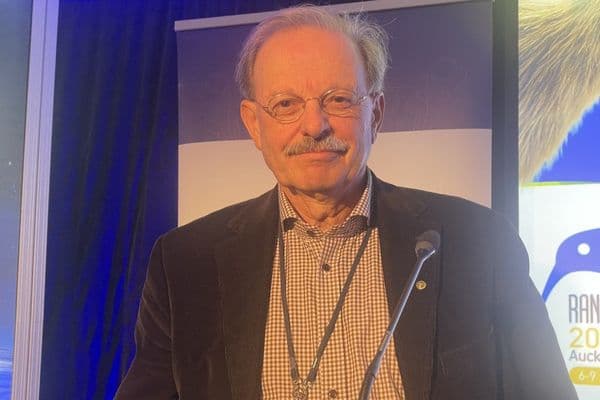
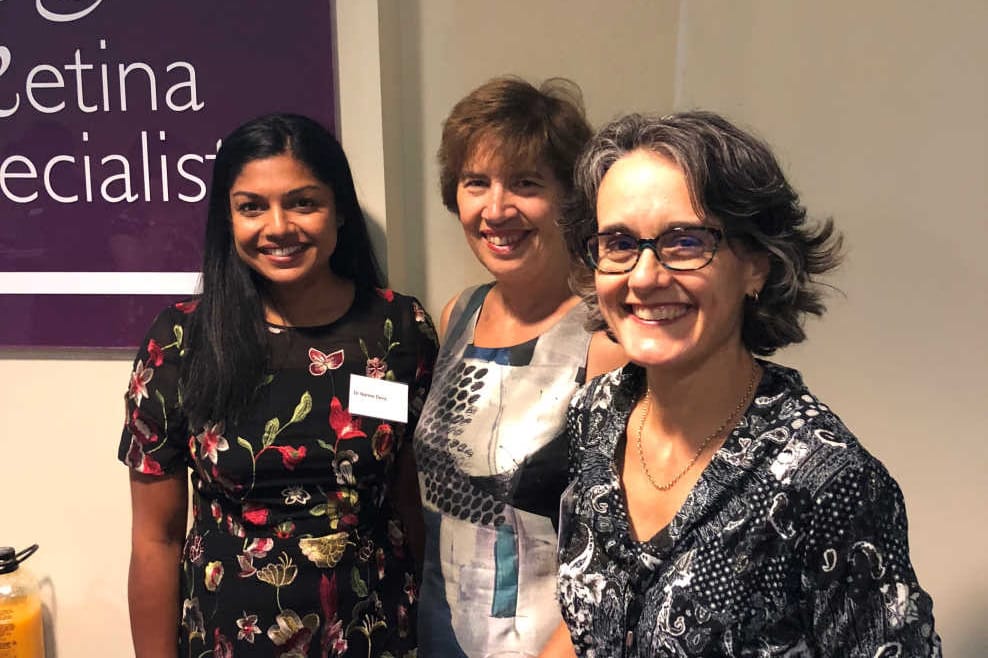
The all-female speaking line-up for the evening included Retina Specialists’ Dr Rachel Barnes, Associate Professor Andrea Vincent, Dr Dianne Sharp and Dr Narme Deva.
A pictorial FAF journey
A/Prof Vincent kicked off the evening with a pictorial journey through fundus autofluorescence (FAF) in clinical practice, showing us “pretty pictures” depicting the presentation of various retinal dystrophies and disorders. FAF is a non-invasive technique, which highlights lipofuscin (the main fluroflore in the retinal pigment epithelium). FAF may detect abnormalities beyond the clinical exam and is useful in classifying various retinal dystrophies and disorders, she said.
In albinism, where the retina is not metabolically affected, the FAF appears normal. However, in choroideremia (an X-linked retinal condition affecting males) widefield Optos images show patchy changes with scalloped edges where the retina is ‘metabolically dead’. In X-linked retinitis pigmentosa there is a so-called water-shed zone seen between the good and bad metabolic areas of the retina. In PDE6B retinitis pigmentosa, FAF is very useful - visual results are closely correlated to FAF, so generally visual fields are not necessary and don’t give any extra information, A/Prof Vincent explained.