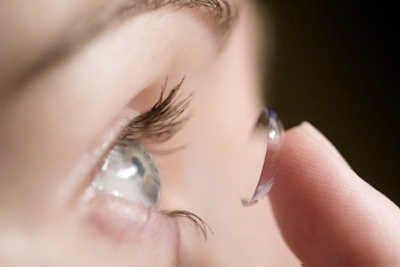
A high-powered international review has criticised unqualified lens suppliers’ inappropriate substitution of soft contact lens (CL) types for ones prescribed by eyecare practitioners.
Substitutions were found to be related to at least one, and as many as six, potential sources of patient dissatisfaction and adverse ocular events, including discomfort and microbial keratitis, reported authors, including Professors Nathan Efron, Queensland University of Technology, Mark Willcox, University of New South Wales, James Wolffsohn, Aston University, UK, and Lyndon Jones, director of the Centre for Ocular Research and Education, Canada. Factors affected by switching CL types included lens properties such as surface treatment, internal wetting agents, material, total diameter, back optic zone radius, thickness, edge profile, back surface design, optical design, power, colour (tint) and UV protection. Altered lens usage, including wearing modality (daily versus overnight wear) and replacement frequency had the broadest impact, they said. Of the 16 factors considered, only back surface design appeared to have no effect on patient satisfaction and adverse events.
The authors highlighted the dangers of misguided substitutions with examples, including, “If a practitioner is seeking to alleviate hypoxic complications of hydrogel lens wear, higher water content lenses are prescribed, or better still, silicone hydrogel lenses, which have a much higher oxygen performance. In such instances, improper substitution for a low-water content hydrogel lens could result in hypoxic ocular complications.”
The authors concluded that, “It is in the best interests of contact lens wearers that the intended contact lenses are prescribed and fitted and that lenses are never substituted for another lens type without prior consultation with an eyecare practitioner, for the simple reason that all soft contact lenses are not created equal and a different lens may have properties unsuited to the patient.”
The full review was published in Contact Lens & Anterior Eye.