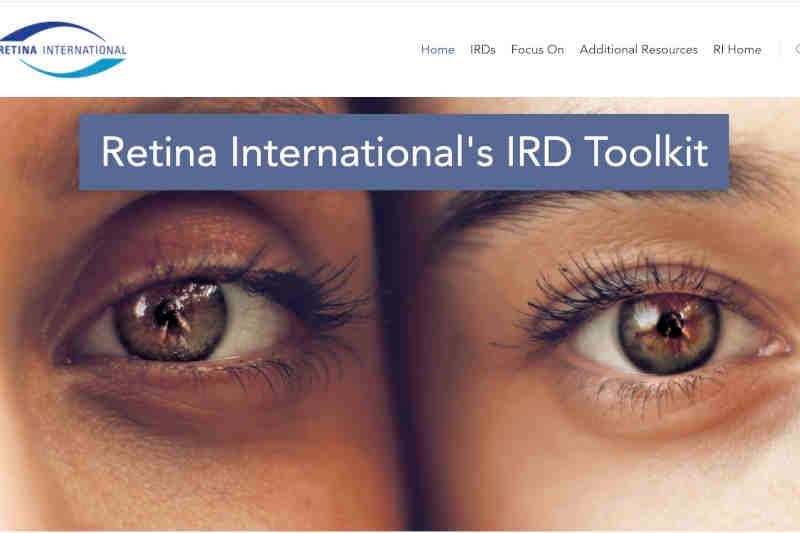
Retina International (RI) has launched a global toolkit on inherited retinal diseases (IRDs), a central hub with information aimed at IRD patients, their families and carers, health care professionals, researchers and those in industry and policy making.
RI’s World Congress, held in New Zealand in February 2018, highlighted the need for a reliable, always up-to-date and free resource for the global IRD community. Work on the toolkit began soon after, though it had been in the planning stages for a while, said RI’s science and communications officer Sarah McLoughlin.
The web-based resource provides general information about IRDs, treatments and advocacy, and has dedicated sections on specific IRDs such as Leber congenital amaurosis (LCA), Usher syndrome, Stargardt disease and choroideremia. Further disease-specific sections are planned, RI said, adding the resource is also useful for those wishing to delve deeper into, for example, the genetic basis of an IRD or what clinical trials are available for a particular type of IRD.
“Providing professionals with clear, easily searchable, navigable and concise information on IRDs, the toolkit gives a solid foundation of relevant information to anyone advocating for improved services for affected individuals, and for funding of relevant research to help support development and reimbursement of innovative therapies,” said local Retina International volunteer Fraser Alexander.
Retina International said part of the aim of the toolkit is to give insight into what life is like with different IRDs and the patient journey. It’s a resource the ophthalmic community can also direct their patients towards to find out more information as it is free, easily accessible for visually impaired individuals and presented in layman’s terms to ensure it’s understandable to the public, said Alexander. “The toolkit has benefited from input from a wide range of individuals and organisations that supported development and reviewed the content, and website design and testing.”