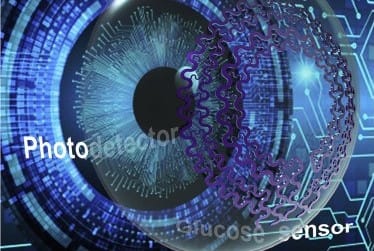
An international team, including researchers from Surrey University in the UK and Harvard in the US, has developed an ultra-thin sensor for use in ‘smart’ contact lenses.
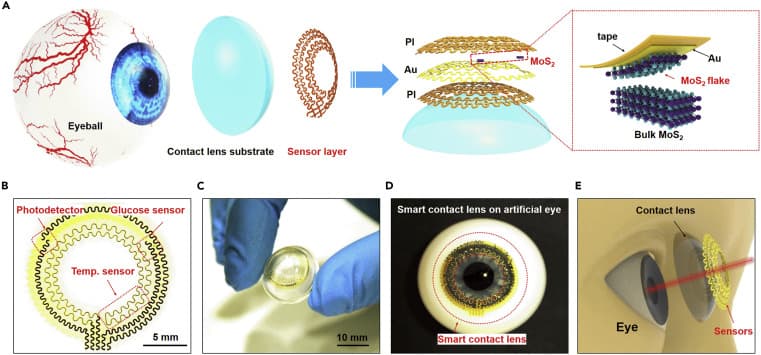
The sensor detects light, glucose and temperature, for diagnosing potential corneal disease, said researchers. Study lead, Dr Shiqi Guo from Harvard, said, "Our ultra-thin sensor layer is different from the conventional smart contact lenses, with their rigid or bulk sensors and circuit chips sandwiched between two contact lens layers. This new layer could instead be mounted onto a contact lens maintaining direct contact with tears, thanks to its easy assembly, high detection sensitivity, good biocompatibility and mechanical robustness.” The MoS2 transistors-based serpentine mesh sensor can be mounted onto the inner surface of a contact lens, allowing direct contact with tears without interfering with blinking or vision, he explained.
Lenses could monitor multiple biomarkers