Since herpes zoster (HZ) infections can cause permanent vision loss, eyecare professionals should make it a priority to talk to patients aged over 50 years about the importance of preventing shingles through vaccination, said Dr Rachael Niederer, an ophthalmologist and senior lecturer at Auckland University.
Dr Niederer emphasised the importance of the Shingrix vaccine, which is administered in two doses, two to six weeks apart. This vaccine has shown remarkable efficacy, she said, with an overall effectiveness of 97.2% in individuals aged 50 and older, and 91.3% in those aged 70 and older. “Shingles is a terrible disease. About 1 in 10 people who get it will lose their vision. It's common and I frequently see people who lose their vision due to shingles,” she said.
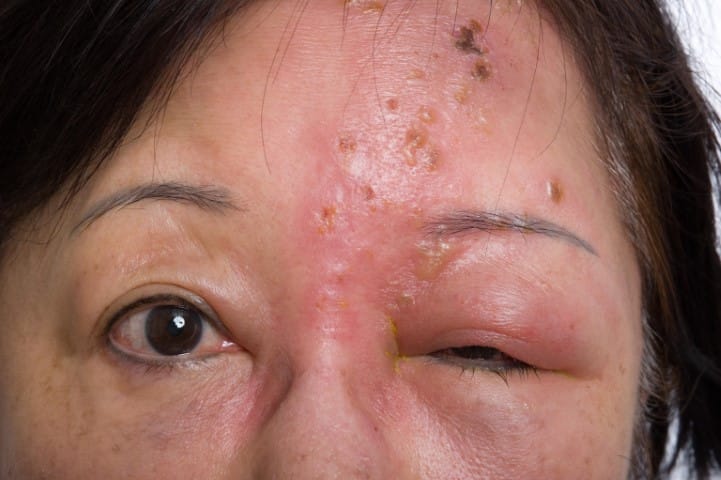
When the varicella-zoster virus reactivates in the ophthalmic division V1 of the trigeminal nerve, it can lead to herpes zoster ophthalmicus (HZO), which often manifests as conjunctivitis, uveitis and keratitis, she said. Approximately one in three people in New Zealand will experience shingles in their lifetime, with 10–15% of these cases affecting the V1 distribution and half of these involving the eye. The risk of moderate (6/15) permanent vision loss is 1 in 10, while severe (6/60 or worse) vision loss is 1 in 30 for those with V1-distribution.
Further HZO complications include corneal scar, neurotrophic keratopathy, band keratopathy, corneal melt, corneal perforation and acute retinal necrosis or panuveitis, all contributing to vision loss, she added.
Patients with shingles can suffer from permanent nerve pain, chronic dry eye, and even dementia, said Dr Niederer, with cranial nerve palsy leading to stroke and double vision in rare cased.