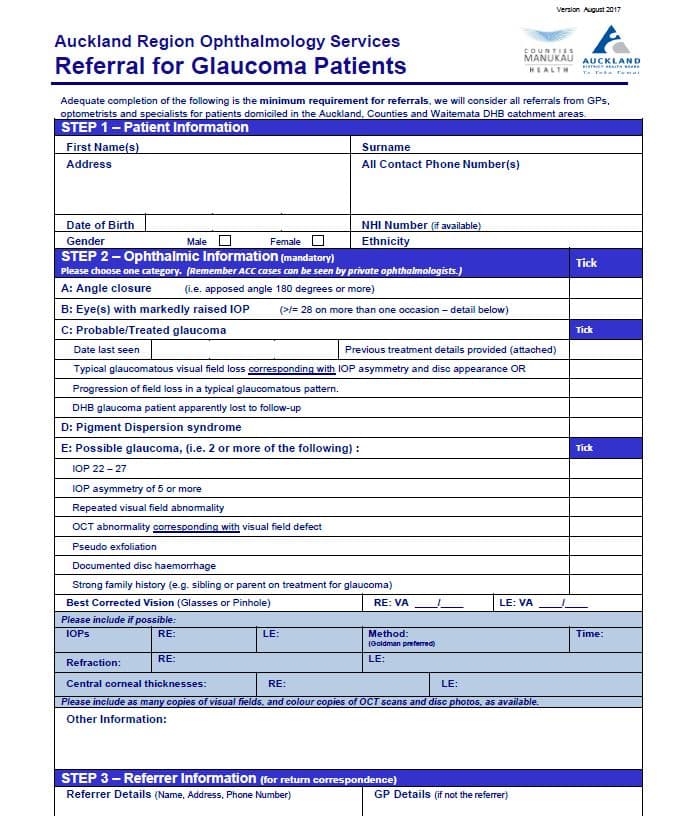
Counties Manukau ophthalmologist Dr Jim Stewart has made a heartfelt plea for shorter referrals from optometrists for their glaucoma patients.
The public health system is struggling with limited government funding, an ageing population and high demand for new therapies, he told the audience at the recent Glaucoma New Zealand Symposium. “We consequently are only looking to see cases of definite glaucoma and we expect community optometrists to monitor most suspects and some low-risk glaucoma cases.”
Speaking afterwards, Dr Stewart said most referrals are sent with too much unnecessary information, some with as many as five extra pages attached. He can receive up to 30 of these a day (though 10 is the norm) and he and his colleagues simply don’t have time to read that amount of information every day at the end of their clinics. “I believe the optometrists think they are being helpful, but they haven’t looked at it through our eyes. They put a lot of effort into these letters, which is unnecessary.”

The ophthalmologists do try to at least skim all the information sent, however, as there could be important facts buried within the mundane, but it’s very easy to miss important things when you do that, he said. “What we really want to know is why they are referring this patient. They may be sending them for more than one reason: they may have narrow angles but also a visual field defect, or something else, perhaps something in the back of the eye that they’ve found.” This critical information needs to be clearly stated up front, said Dr Stewart.