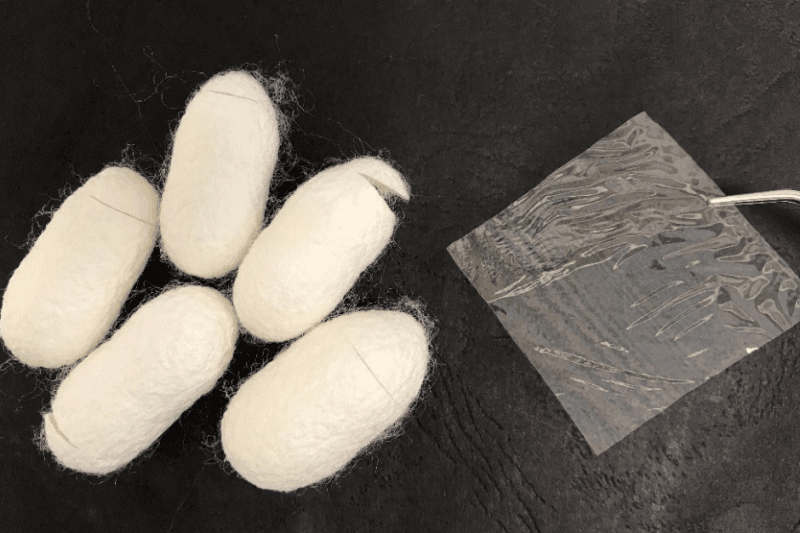
Could silkworm cocoons be the answer to preventing millions of people from going blind from age-related macular degeneration (AMD)?
Researchers at Brisbane's Queensland Eye Institute (QEI) have demonstrated that sericin, one of the two proteins that make up the silk thread (the other being fibroin), can mitigate oxidative stress and the harmful effects of free radicals associated with AMD, glaucoma and retinopathy.
With current treatments aimed at slowing vision loss, there is no therapy available to reverse the toxic effects caused by oxidative stress on the retina and photoreceptor cells, said QEI team lead Professor Traian Chirilă. “Retinal cell transplants have thus far proven to be of limited value to patients, as the healthy cells are eventually exposed to the same high levels of oxidative stress once they are transplanted.”
Trying to reset the balance between free radicals and antioxidants, the researchers investigated the biological and clinical responses of various eye cells to fibroin and sericin. Prof Chirilă’s team demonstrated that sericin isolated from silk cocoons is a more effective substrate for the growth of the corneal and retinal cells and that solutions of the protein had a significant antioxidative effect.
With this evidence, the QEI research team is continuing its investigations using sericin produced by a mutant silkworm, created by Japanese scientists. The mutant silkworm produces cocoons that contain only sericin, requiring no extraction or purification.