The Colorado Convention Center’s blue bear, named ‘I See What You Mean’. Credit: Instagram/voegele.martin
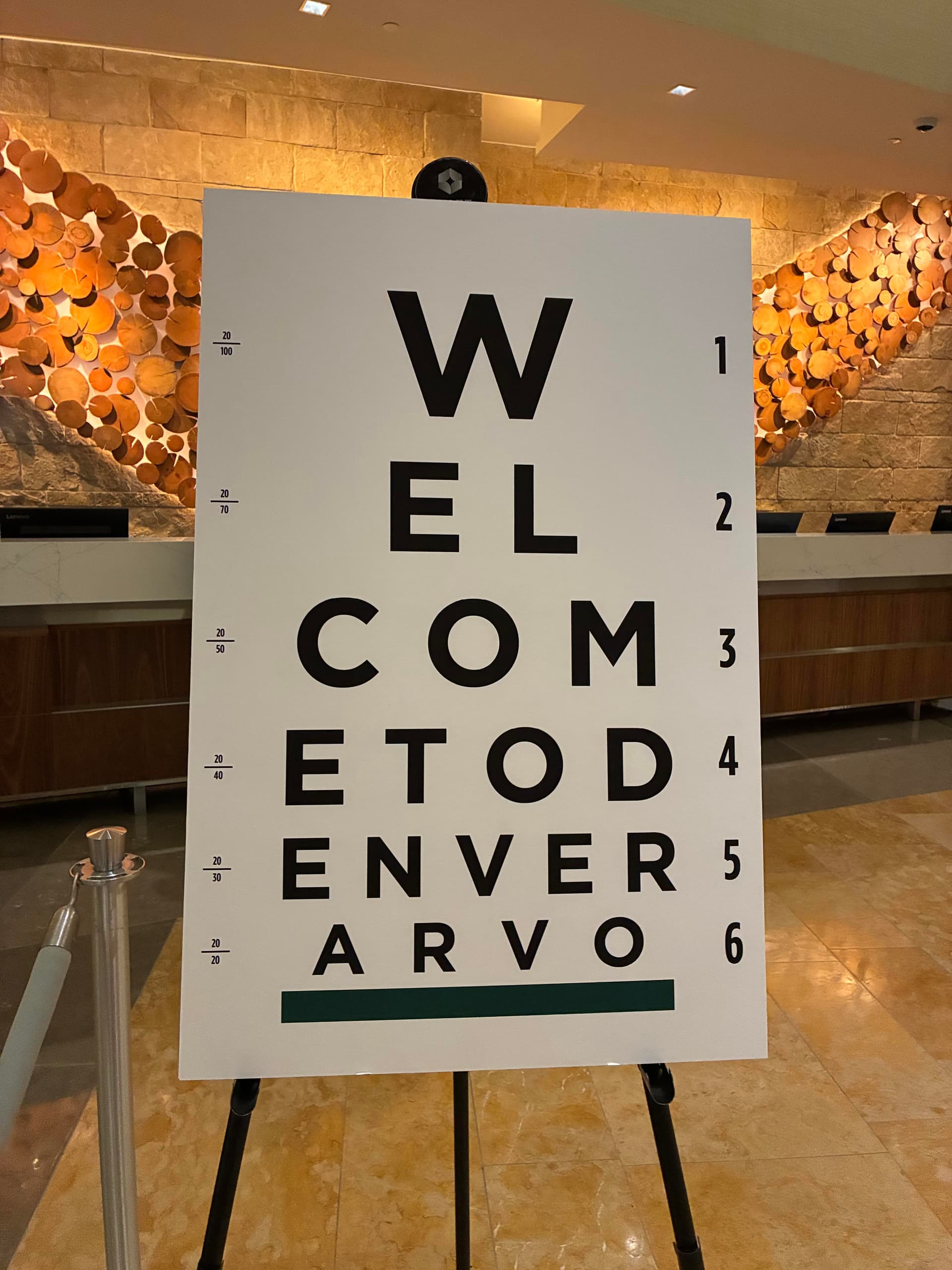
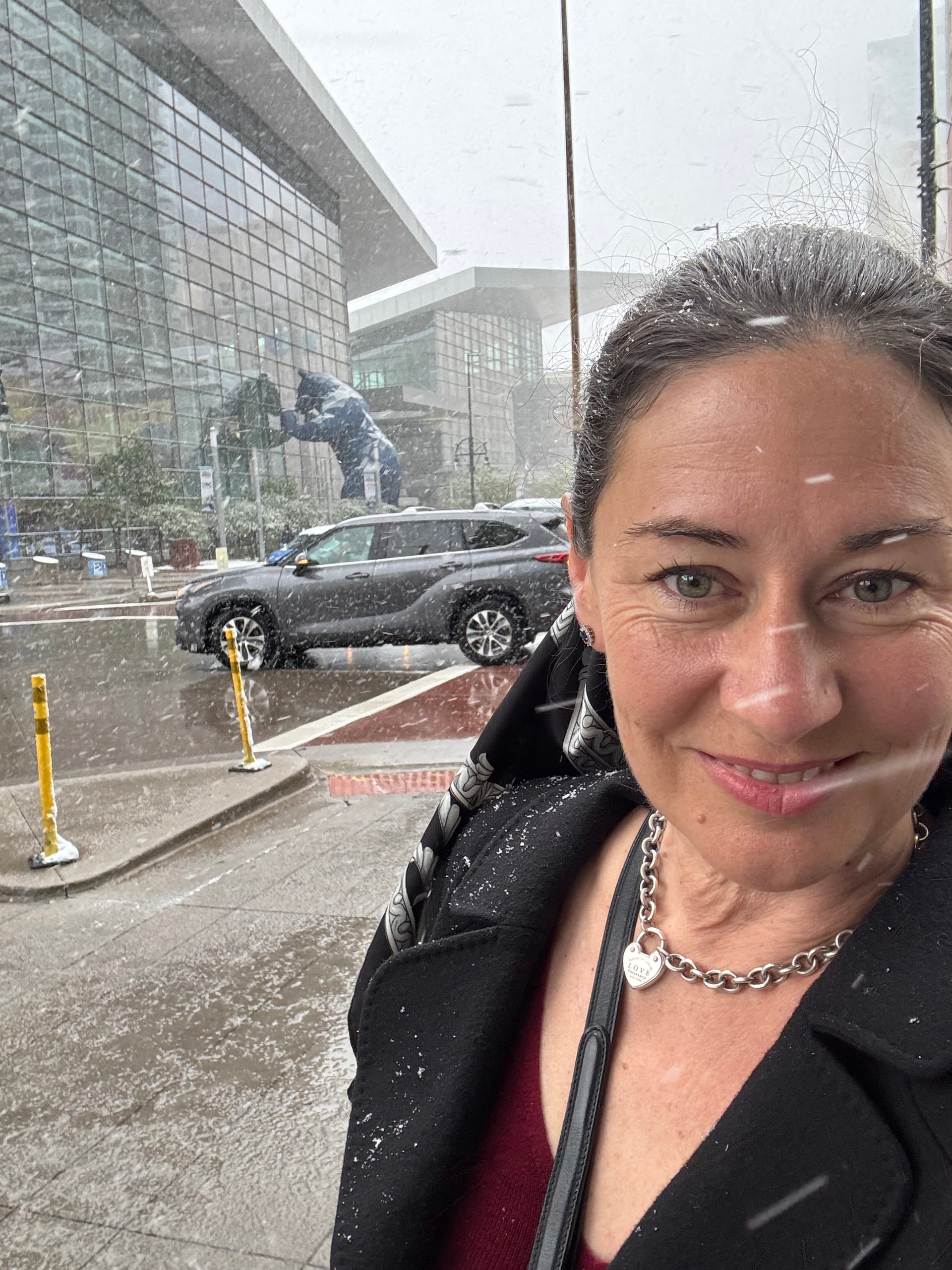
This year’s Association for Research in Vision and Ophthalmology (ARVO) Annual Meeting provided a historic first – snow! An unexpected storm turned Denver’s mountain backdrop white, entertaining and freezing the attendees. The Mile High City has had a huge downtown refurbishment since my last ARVO here in 2015, with the 16th Street Mall and Union Station now clean, thrumming with tourists and lined with restaurants.
The famous huge blue bear at the Colorado Convention Center welcomed approximately 8,500 attendees to the world’s largest vision research meeting. This represented a 20% drop from last year’s meeting, perhaps partly due to the grant challenges the world’s researchers are facing, but there were also stories of US entry-visa challenges. However, the meeting was a fantastic update and an opportunity to make new connections with global collaborators.
Dr Sarah Hull is a senior medical officer specialising in genetics and paediatrics/strabismus, consulting at Greenlane Clinical Centre and Auckland Eye and a senior lecturer at the University of Auckland.
Supporting emerging talent is one of Silmo’s core commitments and its annual Optical Design Contest provides an international launchpad for design students from around the world.
Washington University in St. Louis powerhouse couple Professors Cecilia and Aaron Lee presented a stunning keynote address on the evolution of research towards big data and machine learning. Describing their origins in paper-notes-based research, they took the audience on a journey through their research’s evolution into large datasets and the analytical tools needed to interrogate them. Their recent research, AI-readi (artificial intelligence ready and exploratory atlas for diabetes insights), created an exceptionally comprehensive dataset focusing on type 2 diabetes in 4,000 patients. This not only includes detailed ophthalmic clinical phenotyping, but multiple systemic, lifestyle and environmental markers, and includes patients with a range of disease severity, including non-diabetics. The research is aimed at a better understanding of factors that contribute to health as well as to disease progression.
NAMs
New approach methodologies (NAMs) were a theme throughout the meeting, including in the update address from Michael Chiang, director of the National Eye Institute. NAMs aim to reduce reliance on animal models by using cell-based assays, organoids, organ-on-chip technology and in-silico and AI computational methods. They are faster, scientifically robust, more human-relevant and provide platforms for both studying disease and developing novel therapies.
A/Prof Rachael Niederer braving the Denver snow
Gene-agnostic therapies
Many phase 3 studies were presented on gene therapies, which typically use a viral vector delivered by subretinal injection. Alternative routes and gene-agnostic (not specific to that gene) therapies were also prominent. Given the hundreds of genes involved in retinitis pigmentosa (RP) alone, therapies that benefit any RP genotype have huge potential. This is particularly relevant for the rarest subtypes, for which the cost of developing gene-specific treatment is prohibitive but also for the approximately 30% of patients for whom current genetic testing does not achieve a molecular diagnosis.
Gene-agnostic therapies presented included an oral treatment with an antioxidant derived from N-acetylcysteine. Phase 1/2 results showed that it was safe and reduced ellipsoid zone loss over 24 months for patients with Usher-related RP but is considered generalisable to all RP. A phase 3 randomised controlled trial (SLO-RP) comparing this treatment against placebo is now planned in Australia and the US.
Optogenetics treatment with MCO-010 (Nanoscope Therapeutics) involves an intravitreal injection of an adeno-associated virus 2 vector carrying an opsin gene that transfects the inner retina – specifically the bipolar cells to turn them into light-sensing cells. Professor Vinit Mahajan from Stanford presented three-year REMAIN follow-up data from the phase 2b/3 RESTORE trial, in which patients with advanced RP received a single injection of MCO-010. On average, patients gained three ETDRS lines (0.3 logMAR) of vision and the treatment effect was sustained and safe.
A potential treatment for NAION
Professor Joyce Liao from Stanford presented a potential treatment for non-arteritic anterior ischaemic optic neuropathy (NAION), the commonest cause of acute optic neuropathy in patients older than 50 years and currently without any proven treatment. She presented retrospective data on patients with NAION treated with high-dose niacinamide (water-soluble vitamin B3) tablets. An animal model found niacinamide increased mitochondrial transport along the optic nerve and increased retinal ganglion cell survival. The retrospective data on 90 patients found an average improvement in visual acuity of three lines from baseline. A phase 2/3 prospective randomised controlled trial (Namaste) is now recruiting patients presenting fewer than 30 days from onset of symptoms. Given the lack of treatment for NAION, this could be hugely impactful.
NASA astronaut Dr Michael Barratt's vision changes aboard the ISS helped identify spaceflight-associated neuro-ocular syndrome (SANS). NASA continues research into
Melbourne's Six Six redefines optometry as a luxury self-care experience, combining advanced diagnostics and optical retail in a immersive, calm environment