Most eyecare professionals understand that restoring healthy equilibrium to the ocular surface is necessary to relieving the symptoms of dry eye disease (DED). But it’s equally important to acknowledge that healthy balance has been disrupted not just in the tear film and ocular surface, but in the daily routines of millions of people.
In the wake of Covid-19, people have dramatically reduced their time outdoors, with a disproportionate amount of their indoor time devoted to screens. Given this environment, it’s essential that eyecare professionals treating DED factor-in not just the state of the ocular surface but how their patients’ behaviour has contributed to the condition.
Lifestyle factors
Several large, cross-sectional studies have shown that greater digital screen use is associated with higher risk of clinically diagnosed dry eye1-4. When the outer lipid layer of the tear film is already compromised by tear-film imbalance, excessive evaporation of tears is induced. Artificial tears are considered the first line of defence to protect patients from the cascading effects of evaporative dry eye. However, many such supplements come in multi-dose bottles containing preservatives, long-term use of which may compromise the ocular surface and worsen the patient’s discomfort5,6.
While aqueous-based eye drops or gel-like lubricants may help reduce the symptoms of dry eye temporarily, they will fail long-term because they don’t restore the steady-state equilibrium of the ocular surface7,8.
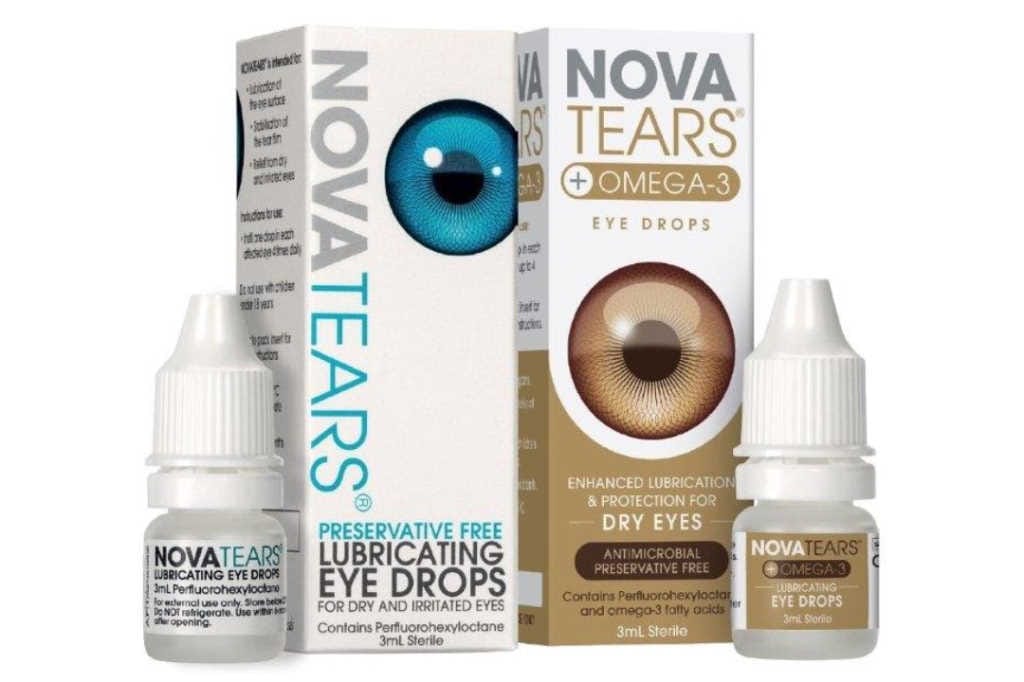
NovaTears is a preservative-free eye lubricant and tear-film stabiliser specifically designed for the relief of evaporative dry eye disease by preventing excessive tear evaporation. Because of its formulation, it spreads quickly and smoothly across the surface of the eye, consolidating the lipid layer and allowing the underlying water layer to be replenished by natural tears. The eye surface can then return to a healthy equilibrium.
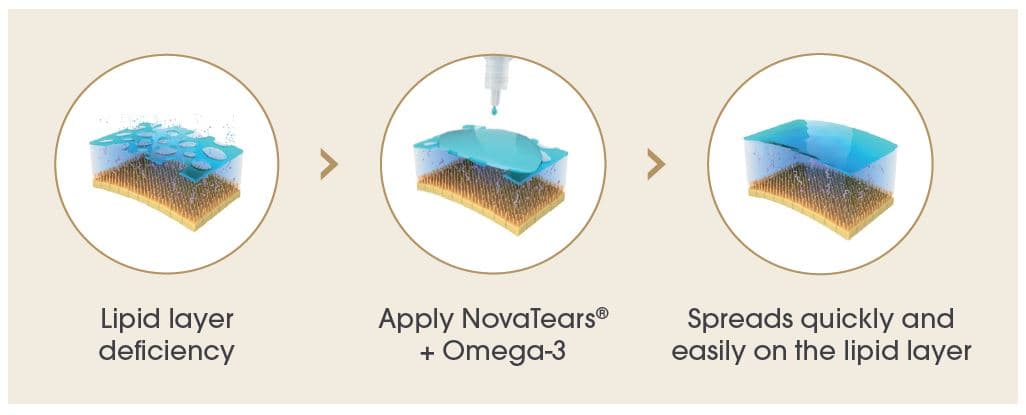
NovaTears+Omega-3
A recently published study concluded the addition of vegan-sourced omega-3 fatty acids to NovaTears “significantly improved clinical signs and subjective symptoms in patients with evaporative dry eye.”9 The study also confirmed improvements were evident on a broad range of measures, including total corneal staining, tear break-up time and meibomian-gland assessments.
Patient education and engagement
Digital screen use is a risk factor for DED, yet it is an inescapable part of everyday life. Patient education needs to include: a discussion of screen-engagement habits; a list of dry-eye prevention strategies, such as blinking exercises and reduced time with digital devices; and the guided use of preservative-free tear supplements such as NovaTears and NovaTears+Omega-3.