What happens when a child can’t see well enough to learn – but still wants to play the guitar, read a book and go to school? At BLENNZ (Blind and Low Vision Education Network New Zealand), the answer is simple: find a way that works for them. BLENNZ supports more than 1,675 children and young people aged 0 to 21 years who are blind, deafblind, or have low vision, helping them learn, grow and thrive in ways which suit their unique needs.
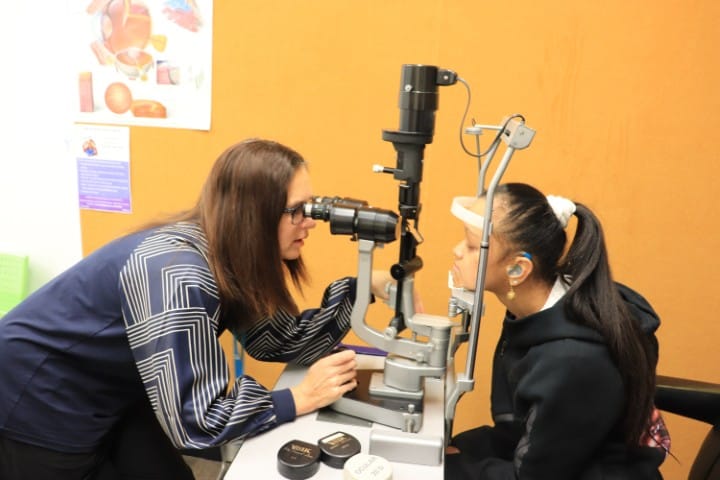
Spending every Monday morning at BLENNZ Homai Campus in South Auckland, paediatric ophthalmologist Dr Rasha Altaie agrees BLENNZ is all about seeking an alternative method of learning that works for the child. “Once I saw a kid with retinitis pigmentosa and I asked him what his hobby was. He said reading. Having learnt braille, he had read all seven volumes of the Harry Potter books. These braille volumes were so large you could have built a house with them! But he was happy and able to pursue his hobby, thanks to BLENNZ,” she said.
For BLENNZ to be able to help, it is imperative it sees these kids in the first instance, said Sue Arrojado, BLENNZ assessment services practice lead. “If vision impairment is impacting a child’s access to learning, refer them. Refer even if you are not quite sure they meet the criteria, or when there’s no confirmed diagnosis. We need to see that child and we need to work together to support them to reach their full potential.”
Thanks to the advancing treatment of conditions like retinopathy of prematurity (ROP), BLENNZ is seeing significantly fewer young New Zealanders blinded by ROP. The network now primarily deals with complex-needs children and young people – with neurological conditions like cerebral vision impairment on the rise, explained Arrojado.
Supporting the majority of children and young people in its care, at home or in early-childhood centres, kura or mainstream schools, BLENNZ’s vision-resource teachers and developmental orientation and mobility aides work in partnership with parents and whānau, offering specialist support. “This is the beauty of BLENNZ, that it considers the child and their whānau,” Dr Altaie said.