Specsavers is on a mission to transform the way optometrists detect, report and refer eye diseases and not just in its own stores, but across the sector as a whole. Heather Douglas reports.
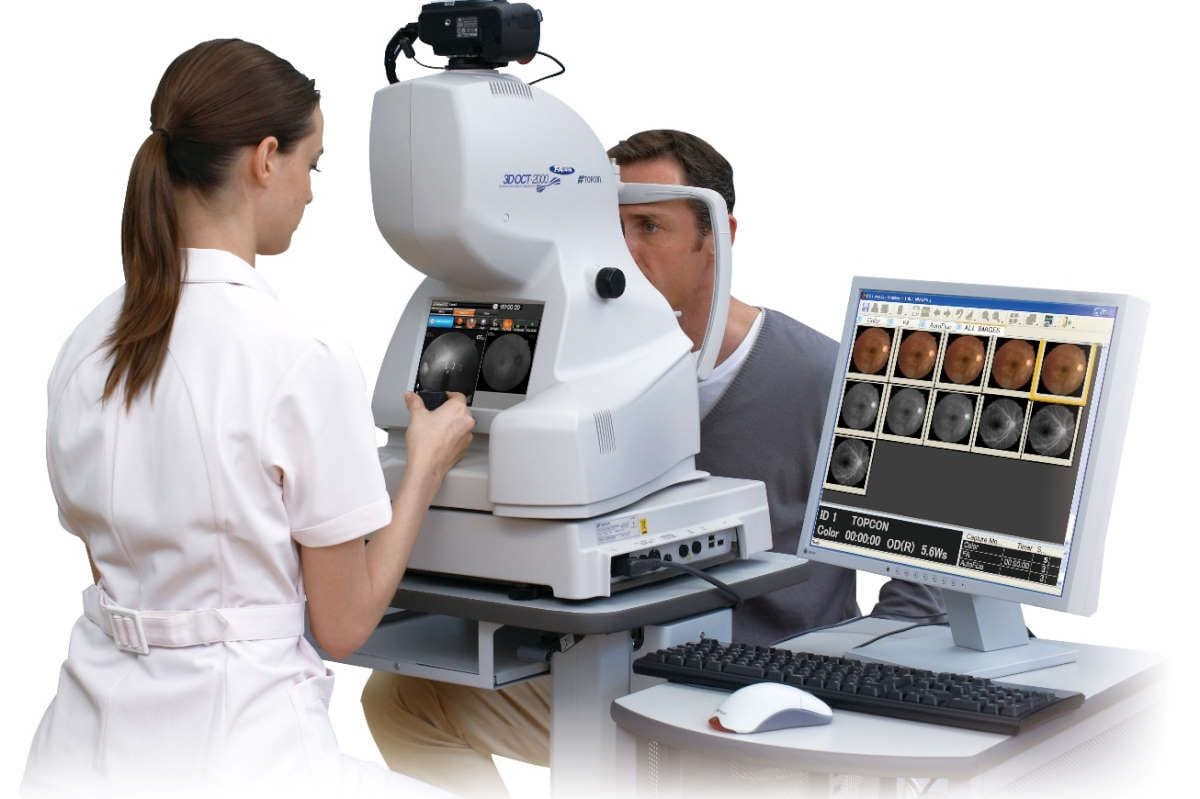
Specsavers says it expects to double glaucoma detection rates by putting optical coherence tomography (OCT) technology in every store in New Zealand this year and in Australia by the end of next year.
New Zealand will become part of the largest glaucoma screening programme anywhere in the world, once the planned OCT rollout is completed by the end of September, says Peter Larsen, Specsavers’ Australasian optometry director. But it’s not just about glaucoma; using OCT technology to detect previously missed disease, while improving the quality of referrals and benchmarking referral rates to identify training and support needs, and capturing disease data, will radically change eye care in the region, he says.
Glaucoma is the initial focus, however, as Specsavers’ Australasian OCT rollout is happening in tandem with the new online optometry-ophthalmology electronic patient referral system, Oculo. Oculo is a technological breakthrough, developed by the Centre for Eye Research Australia (CERA) to capture data and radically improve the quality of referrals, communication and e-sharing of notes and images, between all eye health professionals in a secure manner. The screening will also be aided by the release of the Royal Australian and New Zealand College of Ophthalmologists’ (RANZCO’s) glaucoma referral guidelines, released in 2016 in Australia, with the New Zealand version due to be released shortly, and tested initially by Specsavers’ Australian stores (see NZ Optics’ September 2016 issue).
Affordable OCT technology, Oculo and the updated referral guidelines, all needed to be in place in order to transform the way eye diseases are detected, monitored and referred, says Larsen. “We’re on mission to transform eye health in New Zealand and Australia by focusing on patient outcomes. It’s genuine, it’s real and it’s happening, and we now have the early evidence which already shows it’s working.”