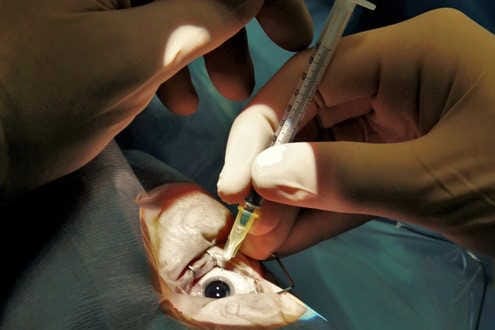
Intravitreal (IVT) reservoirs for the sustained treatment of wet age-related macular degeneration (AMD), diabetic macular oedema (DMO), retinal vein occlusion (RVO) and uveitis have achieved promising results in several trials.
Kodiak Sciences has announced encouraging one-year durability, efficacy and safety data from the ongoing phase 1b study of its therapy KSI-301, which releases an IVT anti-vascular endothelial growth factor (anti-VEGF) antibody biopolymer conjugate from a depot. The platform was compared with aflibercept, which was administered every eight weeks. With more than 2,000 KSI-301 doses administered, two-thirds of patients in each cohort had a six-month or longer treatment-free interval at the end of year one, said Dr Jason Ehrlich, chief medical officer at Kodiak Sciences. "Moreover, 78% of wet AMD patients and 84% of DMO patients were on a four-month or longer interval at year one, as were 75% of RVO patients. Remarkably, 54% of wet AMD patients required only one retreatment and 50% of DMO patients required no retreatment in year one.”
A phase 2b Altissimo trial evaluated Graybug Vision’s sunitinib-malate-loaded depot for AMD treatment. At 1mg dose the median time to first supportive therapy was five months, with 48% of patients not requiring supportive therapy for at least six months and 62% for at least four months or more. GB-103, a longer-acting formulation of sunitinib, has the potential to deliver therapeutic drug levels to the retinal tissue for up to 12 months from a single IVT injection, said the company.
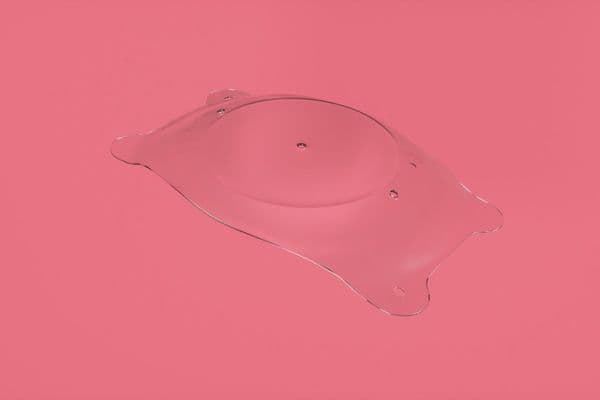
Genentech’s Port Delivery System (PDS) is an implanted intraocular reservoir containing ranibizumab that’s refillable and about the size of a grain of rice. The company’s phase 3 Archway trial showed that 98.4% of patients on the trial lasted six months before needing additional treatment.
Uveitis reservoirs