A US trial has shown a bioengineered stem-cell-derived retinal implant produced donor cells two years after implantation in a patient with advanced dry age-related macular degeneration (AMD), despite a donor-host mismatch and no immunosuppressants.
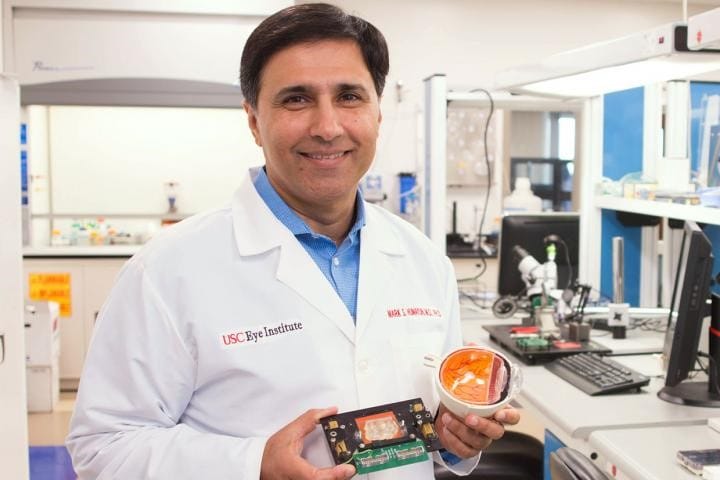
In the phase 1/2b trial, researchers said 15 subjects with advanced geographic atrophy (GA) secondary to dry AMD received the CPCB-RPE1 implant. The sub-retinal implant is described by its developer Professor Mark Humayun, University of Southern California, as a scaffold of human embryonic stem-cell-derived retinal pigmented epithelial (RPE) cells on a parylene membrane.
Although immunosuppressants were given ahead of surgery and ceased at day 60, researchers said ophthalmoscopic examination demonstrated no evidence of inflammation in any of the subjects one year post-implantation. Despite significant donor-host human leukocyte antigen (HLA) mismatch, researchers reported no clinical signs of retinitis, vitreitis, vasculitis, choroiditis or serologic immune response detected in any subject.
Researchers said postmortem histology from one subject with very advanced disease also showed the presence of donor RPE cells two years after implantation. “Due to the extreme severity of GA in this subject, it is not surprising that there was no improvement in vision (prior to death), but the histopathologic and clinical persistence of RPE cells suggests that a therapeutic effect might be possible in less advanced disease,” said Dr Humayun, who is also behind the Argus II epiretinal implant.
For more on Argus II, see www.eyeonoptics.co.nz/articles/archive/bionic-eyes-no-longer-science-fiction