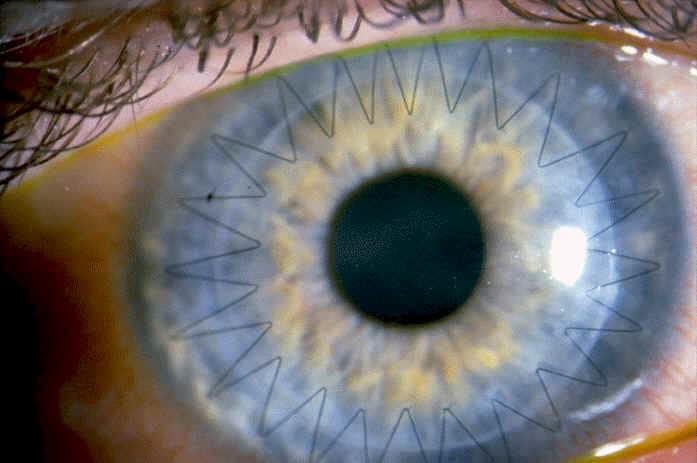
A new University of Auckland (UoA) study identified a potential specific aversion to eye donation in New Zealand, which was previously alluded to in qualitative surveys internationally but never formally quantified.
Writing in Nature, Drs Natalie Allen, Rachael Niederer, Akilesh Gokul, Jie Zhang, Professor Charles McGhee and Nigel Brookes used Organ Donation New Zealand (ODNZ) data from January 2013 to December 2022. Currently, New Zealand performs an average of 350 corneal transplants per year, a number that has been steadily increasing over the past two decades. Of these, 81.4% are co-ordinated by ODNZ, they said.
Over the 10-year study period, 638 multi-organ donors were processed by ODNZ, of whom 40.4% were also eye donors. “This is still substantially more than the 0.01% rate of eye donation in the general population. This study therefore corroborates the understanding that well-organised donor pathways have a greater impact on donor volume than psychological factors,” said researchers.
Asian donors, particularly from China, have a decreased trust in eye donation due to potential ‘misuse’, said authors. However, it was previously reported that Māori and Pasifika were less likely to donate their eyes than New Zealand Europeans (Fig 1). “This was attributed to systemic healthcare inequities and bias. The lack of significant association in this analysis suggests that the Indigenous cultural inequities in organ/tissue donation rates appear to diminish under the correct circumstances with sufficient systemic infrastructure. This has profound implications for the development and targets of organ/tissue donation campaigns,” they said.
Authors also noted a UK study suggested the predominant reason for family refusal of eye donation to be the physical appearance of their family member and eyes being ‘the window to the soul’, while an Australian survey found most respondents didn’t like the idea of someone cutting into their eyes.