An international, collaborative study reveals new insights into how our eyes use vitamin A for all day vision, offering a steppingstone to understanding the processes involved in inherited vision loss.
The study, led by University College Dublin (UCD) Conway Institute, investigated vitamin A recycling and daylight vision by cone photoreceptors, using a drug called Emixustat, currently in phase 3 clinical trial for Stargardt disease, a juvenile form of inherited vision loss.
To see the outside world, the type of vitamin A we eat in our diet switches from an inactive (light-insensitive) to an active (light-sensitive) form in our eyes. “This switch needs to be tightly controlled as too little of the active type or too much of the inactive type of Vitamin A can lead to inherited or age-related forms of blindness,” said researchers, led by Professor Breandán Kennedy.
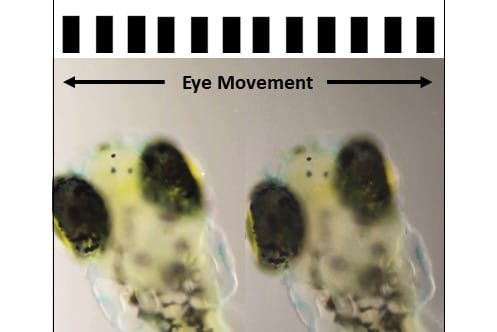
Using zebrafish, as their eyes are similar to humans, Emixustat was used to block the activity of a protein called RPE65, which switches inactive dietary vitamin A to active light sensitive vitamin A.
"Our study found that zebrafish administered with the drug had poorer vision immediately after being removed from night-time darkness. They also had less light-sensitive vitamin A,” said PhD researcher Rebecca Ward. “This means that when we are in darkness, RPE65 protein is important to make the light-sensitive vitamin A, so our eyes can see when moving to a well-lit environment."