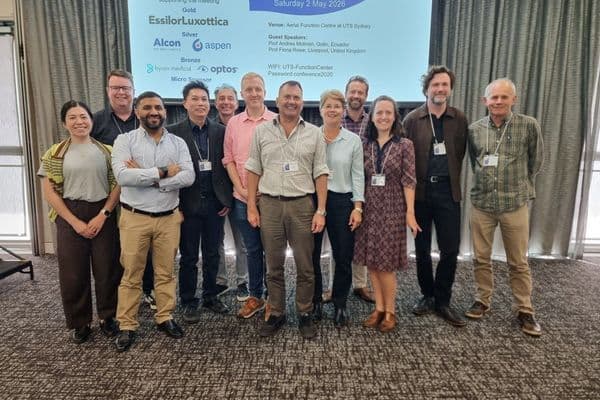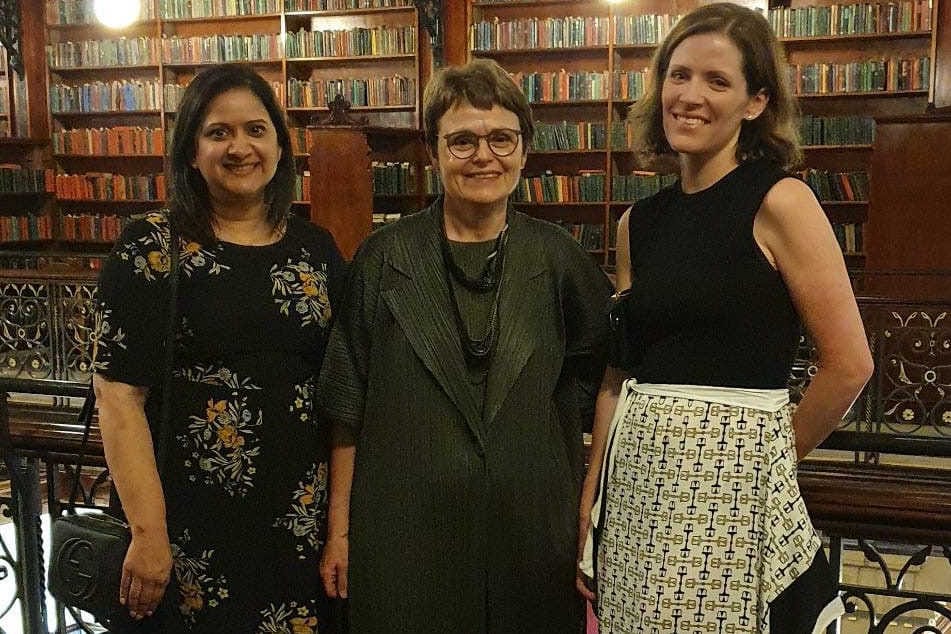
This year’s squint club was held in beautiful Adelaide, with lectures held at the Women’s & Children’s Hospital. This annual meeting is always a great opportunity to catch up with colleagues from across New Zealand and Australia, as well as learning about challenging strabismus cases and surgical approaches.
Guest speakers came from Moorfields Eye Hospital in London, with consultant Gill Adams talking on a wide range of topics including complex strabismus, diplopia after other ocular procedures, thyroid eye disease and botulinum toxin. Leena Patel, consultant orthoptist talked on the diagnosis of distance esotropia, torsion and orthoptic run toxin clinics. Having avoided last minute COVID-19 related flight disruption, we were fortunate to have such experienced and knowledgeable guest speakers at the meeting and they gave excellent lectures.
Adams’ excellent talks on a range of topics included strabismus after ocular surgery. In particular, post cataract surgery when the non-dominant eye undergoes surgery first, when there is incorrectly planned monovision with the dominant eye assigned for near or after subtenons injection. Other frequent causes included post retinal detachment surgery, particularly from buckles, after melanoma plaque treatment and orbital decompression.
From an audit of 6897 glaucoma tube and trabeculectomy surgeries at Moorfields, 2.8% required strabismus referral, 0.6% needed treatment but only 0.1% needed surgery with the rest managed with prism or toxin so absolute numbers were reassuringly low, Adams said. Also pointing out that the biggest culprit in iatrogenic strabismus remains the strabismus surgeons themselves! Several challenging and unusual cases were presented with Dr Justin Mora giving the most entertaining talk; demonstrating what happens when a drill bit hits muscle as performed on some raw chicken.
Day one highlights included multiple mentions of the modified Nishida procedure, including speakers’ experiences of using this for iatrogenic medial rectus transection, double elevator palsy and congenital fibrosis of the extraocular muscles. The technique, as originally described by Yasuhira Nashida in 2005 for sixth nerve palsy, involves transposition of the lateral margins of the superior and inferior recti without muscle splitting or tenotomy. Its advantages include preventing anterior segment ischaemia with a straightforward and minimalist technique.