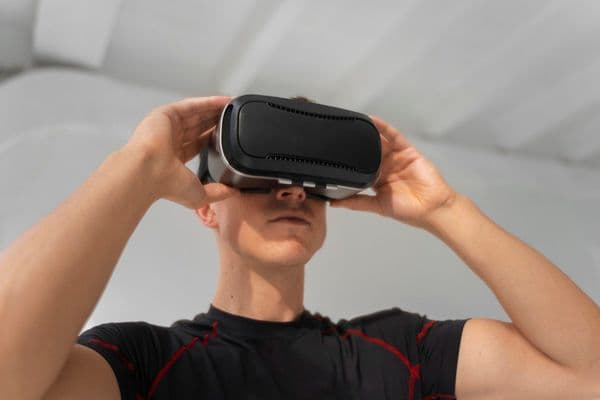
While Dr Yakubin hasn’t used VR clinically, she says she saw the benefits first-hand during her optical training. “When I was at a low vision clinic, VR devices like the Vision Buddy and Olleyes were used to help patients improve their quality of life. These devices typically recreate our reality as a digital twin that the patient’s visual system can process.”
Aria Research, a Sydney-based startup, is undertaking a clinical trial of bionic glasses which allow blind and low-vision users to experience an immersive and detailed perception of their immediate environment in real time. Having reported extremely positive results, the company says the glasses will be manufactured in Australia and expects a 2025 launch.
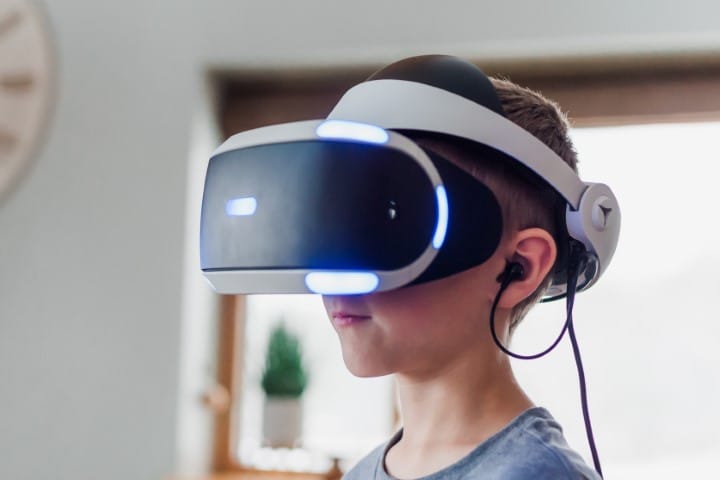
VR can also be used for vision therapy to help train patients with strabismus, convergence insufficiency, amblyopia and possibly even depth-perception issues, in addition to sports vision training to improve hand-eye coordination and reaction time, says Dr Yakubin. Many vision specialists on both sides of the Tasman are currently using these VR training programmes to successfully treat amblyopia in children, as well as those suffering from traumatic brain injuries, she says.
The risks of too much VR
With prolonged VR use, however, patients can experience cybersickness, with symptoms including eyestrain, headache and nausea, says Dr Yakubin. “This might be linked to our ocular and vestibular systems working out of sync, but research is currently underway to better understand and combat what’s actually happening.”