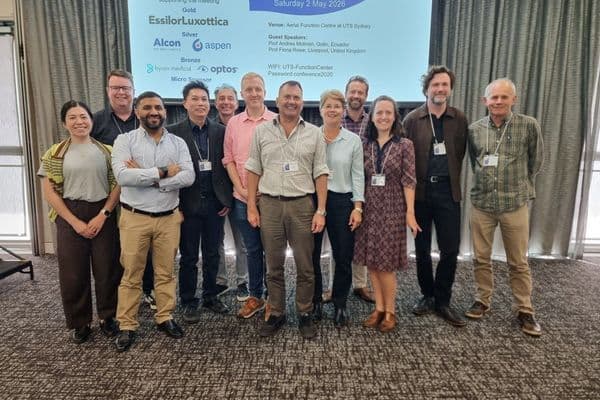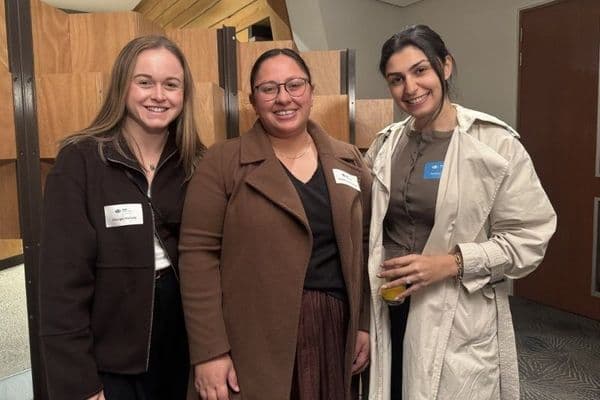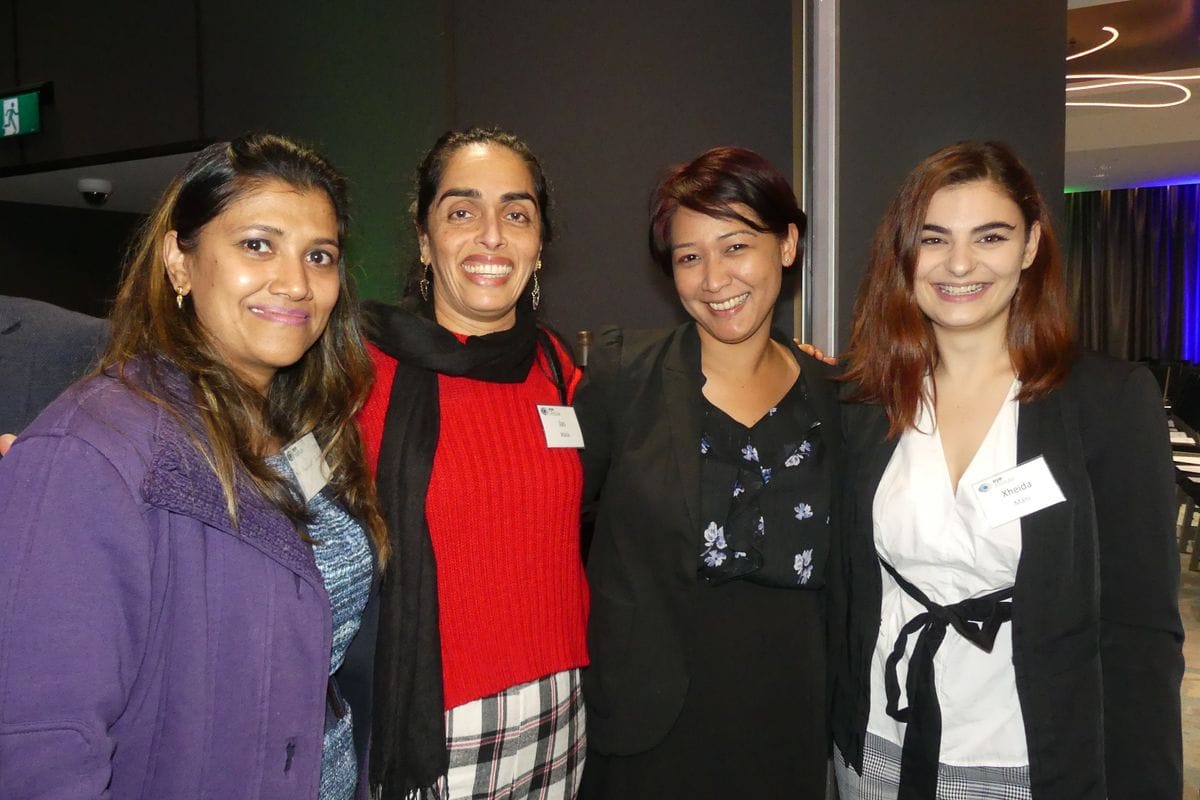
Four Points by Sheraton was full to capacity with Auckland optometrists braving torrential rain to pick up clinical tips and enjoy a delicious selection of food and drinks while catching up with colleagues at the latest Eye Institute seminar.
VR and OCT
Dr Peter Hadden kicked off proceedings discussing therapeutic aftercare of vitreoretinal surgery. Most people find vitreoretinal surgery straightforward to undergo, he said, generally with positive visual outcomes and rare occurrence of serious complications (retinal detachment < 1:1000 and endophthalmitis 1:3000). Cataracts commonly develop over time, usually months to years after the procedure, and glasses typically need to be prescribed at one month if visual acuity is reasonable. Dr Hadden also shared tips on how to perfect ocular coherence tomography (OCT) scans for referral. It’s important to scroll through all the slices, he said, as offering an opinion based on just the central slice may well lead to a wrong diagnosis.
Glaucoma diagnosis and cancer
Professor Helen Danesh-Meyer then shared some guidelines on when to image and when to refer patients with suspected normal-tension glaucoma. Always use a systematic approach and go back to basics, she said, stressing that intraocular pressure (IOP) isn’t an appropriate variable to determine whether it is glaucoma or to do imaging, as glaucoma can occur at any pressure. When referring, always take a thorough patient history into account and, when considering visual acuity (VA) loss, remember VA only decreases with advanced glaucoma. Prof Danesh-Meyer also explained that it’s important to consider the patient’s colour vision, as this is affected by glaucoma, while examining the neuro-retinal rim for consistency and detecting any visual field mismatches are both key for glaucoma diagnosis.