The impact of disease on the ocular surface is often assessed clinically by checking for fluorescein staining of the corneal epithelium, to highlight areas of damage secondary to trauma, infection or desiccation. In dry eye disease, corneal staining is typically superficial, punctate and located inferiorly, as the interpalpebral zone is the area least protected by the eyelids and thus has the most prolonged exposure to the external environment.
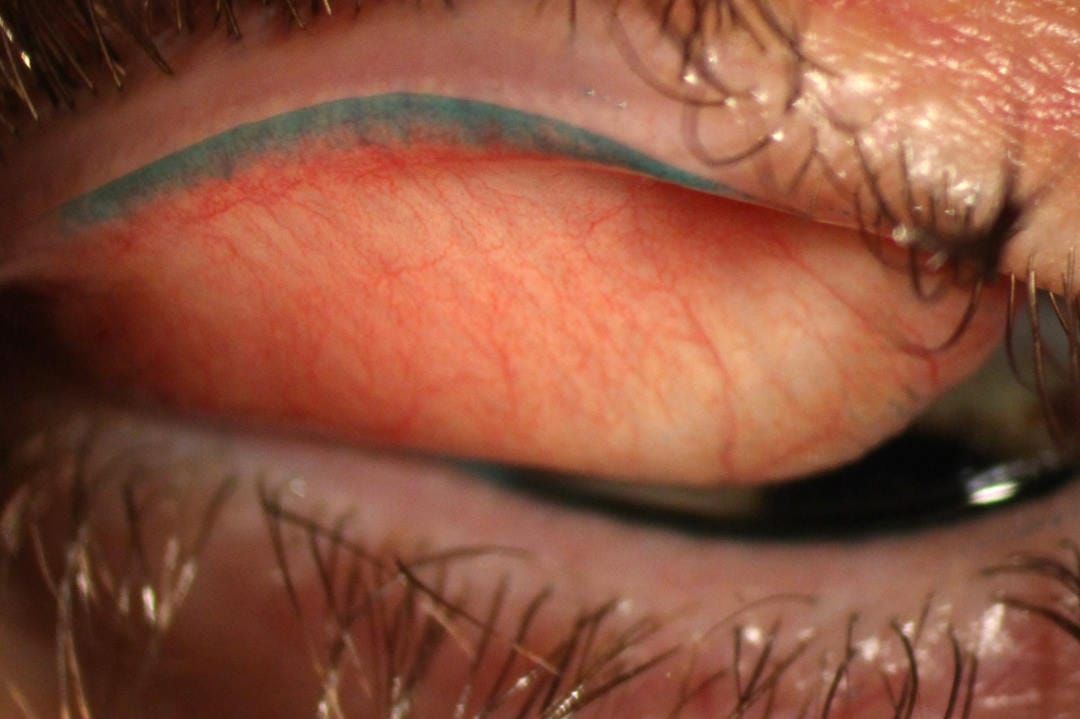
Previous research from the Ocular Surface Laboratory (OSL) has shown that corneal staining tends to occur late in the natural history of dry eye development, often not until patients are in their 50s¹. This late-stage finding is thus often observable only once dry eye has been present for many decades and has become more severe in nature. In contrast, lid-wiper epitheliopathy (LWE) is a marker of epithelial damage at the eyelid margin’s ‘lid-wiper zone’ – the area in constant contact with the ocular surface during blinking – and this has been shown to be visible decades earlier in the disease process¹, potentially making it a superior marker of dry eye, especially in more mild disease².
Most recently, the OSL team has published an article that explores the diagnostic performance of different types of ocular surface staining in detecting dry eye, according to the global consensus TFOS DEWS II diagnostic criteria, to help clinicians choose the most appropriate clinical diagnostic tests to apply³. These findings are based on data from 2066 individuals, with or without dry eye, who agreed to undergo a full dry eye workup, involving both symptoms and signs assessment, and contribute their data to our local research registry.