Procurement, the production, transport and supply of single-use products used in ophthalmology is the biggest single component of ophthalmic surgery’s contribution to our carbon footprint, said Wellington-based ophthalmologist Dr Jesse Gale. “So if we care about reducing the impact of ophthalmology on the environment, procurement is where we should focus our attention.”
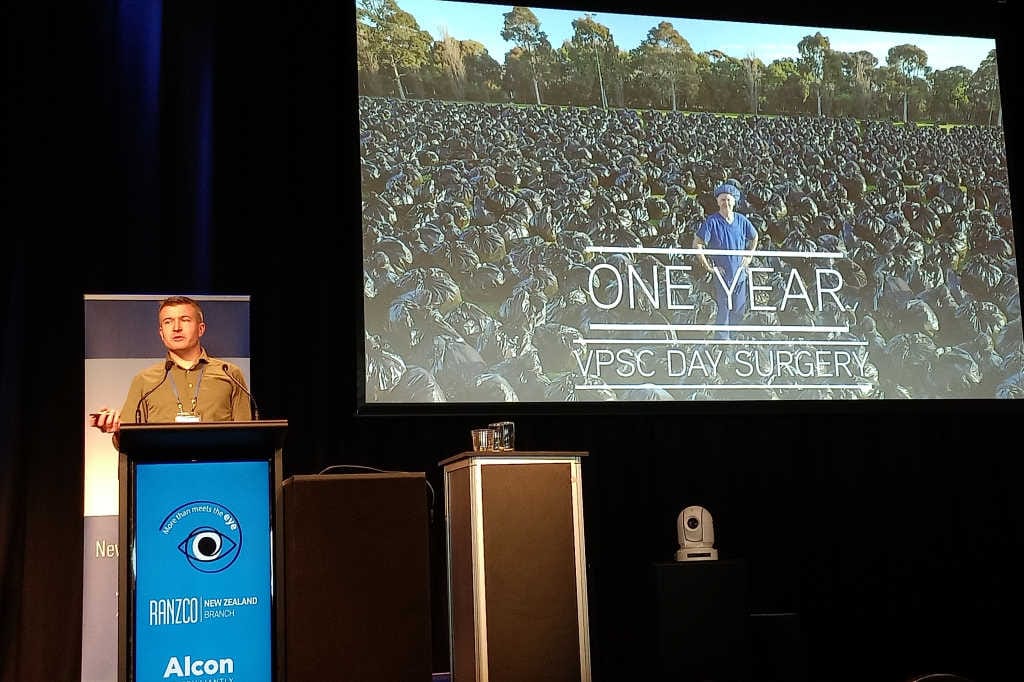
In his talk at the RANZCO NZ scientific meeting about how ophthalmology can tackle the waste from something as common as intravitreal (IV) injections, Dr Gale said an image simulating the waste from one year, from one Melbourne-based day surgery, is confronting. The issue is consumption, which scales up significantly when it’s an extremely common procedure like IV injections or cataract surgery, he said.
To help tackle this problem, RANZCO’s sustainability committee surveyed how RANZCO fellows did their injections. Most performed them in procedure or clinic rooms, but 4% (most likely in Australia, said Dr Gale) were still using operating rooms, which are far more expensive in cost, resources and time. “So there is an obvious opportunity to reduce consumption if we don’t do our injections in theatre.” As for anaesthetic, most ophthalmic teams use Minims Oxybuprocaine for topical anaesthetic, using one per patient, while about a third of those who prefer injected anaesthesia use a separate vial of lignocaine for each patient and throw away the rest, together with all the packaging.