Central serous chorioretinopathy (CSCR), characterised by serous detachment of the neurosensory retina and detachments of an altered retinal pigment epithelium (RPE), can be frustrating for both patients and clinicians1. While many acute cases resolve spontaneously, this chronic chorioretinal disorder presents a different challenge, since it can resist conventional treatments and leave patients facing permanent vision impairment2. This case illustrates how innovative laser technology can offer hope when conventional approaches fail.
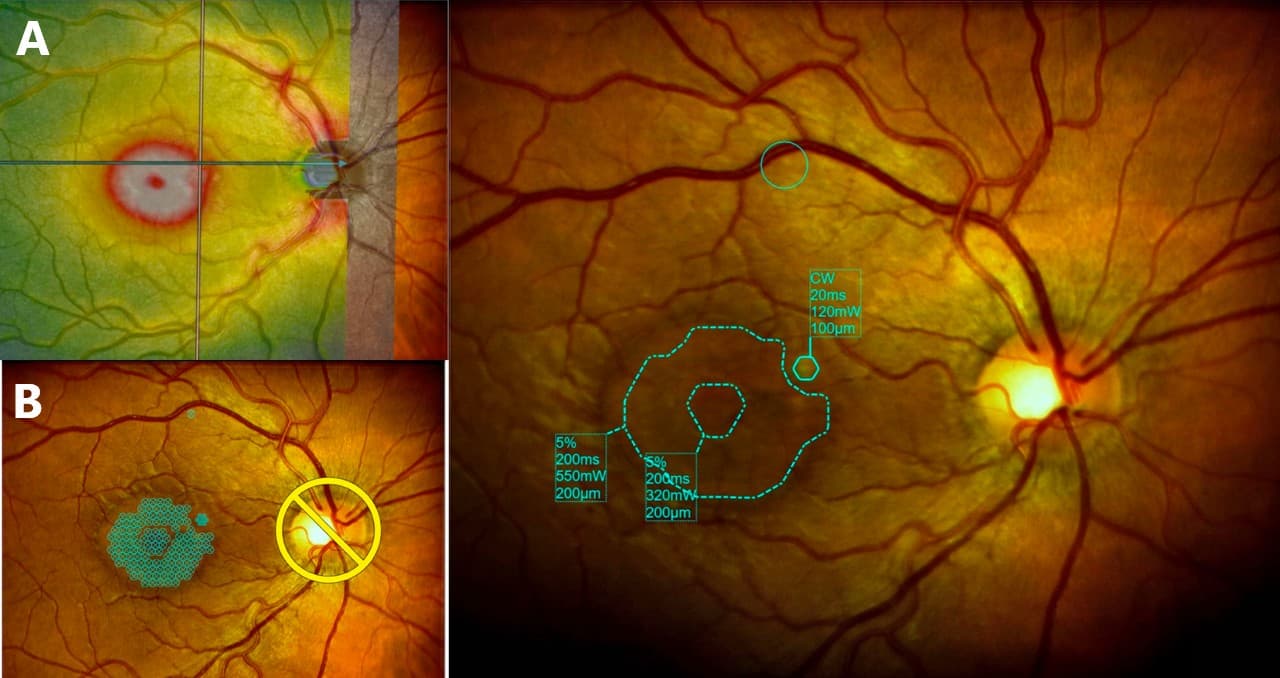
Fig 1A. An OCT thickness map is imported to the Navilas system and automatically registered and overlaid onto to a live fundus image. B. Treatment planning is done on a touch screen and laser treatment is delivered using real-time eye-tracking. Areas of the fundus, in this case the optic nerve, can be marked as no-go areas for the laser. A titration spot at the arcade is used to calculate an appropriate subthreshold power setting. C (large to the right). At the end of laser treatment, an image is captured and a summary documenting areas of threshold (laser uptake visible) and subthreshold (no visible uptake) areas of treatment is produced