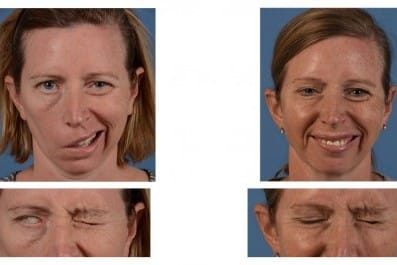
Using a cutting-edge technique, Texas surgeons have restored the ability to blink and voluntarily close their eyes in patients with facial paralysis, protecting their corneas from the progressive damage typically seen in this group.
The procedure, described in Plastic and Reconstructive Surgery, involves reinnervating the muscles around the eye that allow eye closure via a combination of techniques.
Early intervention is key, said study lead, Professor Shai Rozen from the UT Southwestern Medical Centre (UTSW) in Dallas, who found that patients with facial paralysis for less than 18 months benefitted most from the new approach. “Seeing patients early after the injury is very important. Many patients will improve on their own, but for those who don’t, time is critical. Loss of time means loss of muscle and, at a certain point, this loss is irreversible. There’s this window of opportunity that we really want patients and physicians to be aware of.”
Traditionally, surgeons implant gold or platinum weights to the upper eyelid and lift the lower eyelid, allowing patients passive closure of their eyes. This method provides corneal protection at night but less so during the day, when even the slightest wind or air conditioning causes dryness and discomfort, explained Prof Rozen.
The new method, performed on more than 40 patients at UTSW, involves reconnecting nerves back into the muscles around the eye, restoring the orbicularis oculi muscle.