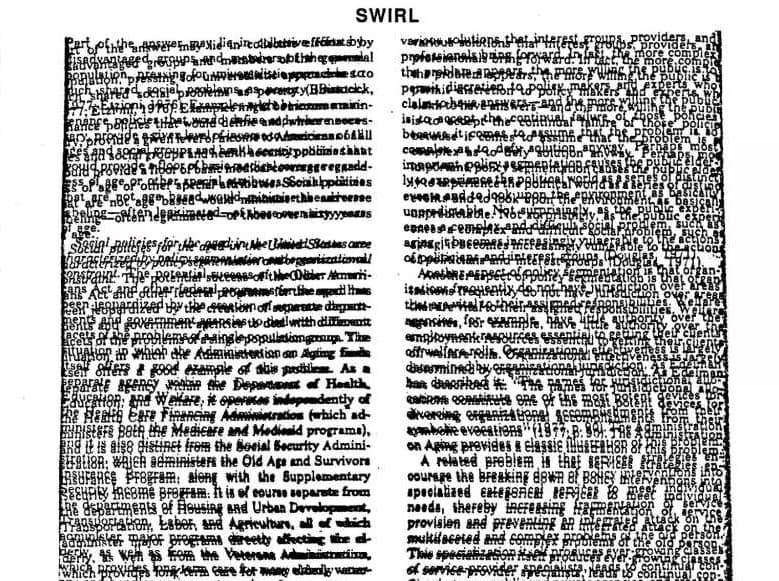
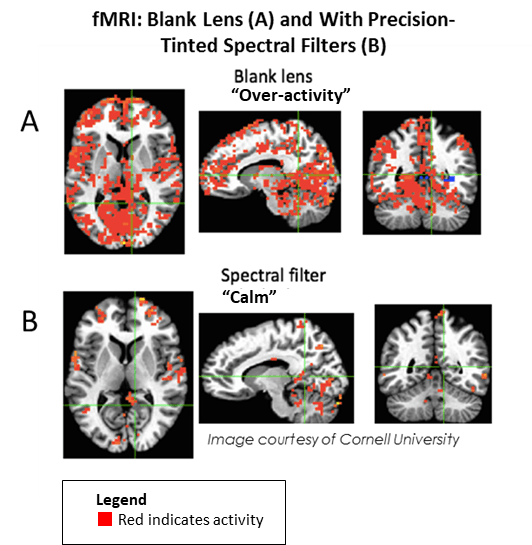
Individuals with Irlen syndrome will often complain of light sensitivity associated with sunlight, bright lighting, fluorescent lights, headlight and glare. They may also have reading problems, as reading becomes inefficient and they may need to re-read for comprehension or build breaks into reading. High contrast (black print on white paper) and visually-intensive activities, create high levels of stress for the brain that trigger physical symptoms which may include headaches and migraines. Brain imaging, both SPECT scans and fMRI, of individuals with this condition shows over-activity, complex brain patterns and non-normalised functioning. This results in a variety of issues, including difficulties reading because of a lack of print stability, issues with glare or discomfort from the white background on the printed page, problems with depth perception and physical symptoms, such as headaches, nausea, dizziness, brain fog, anxiety, strain and fatigue.
What we know about Irlen syndrome
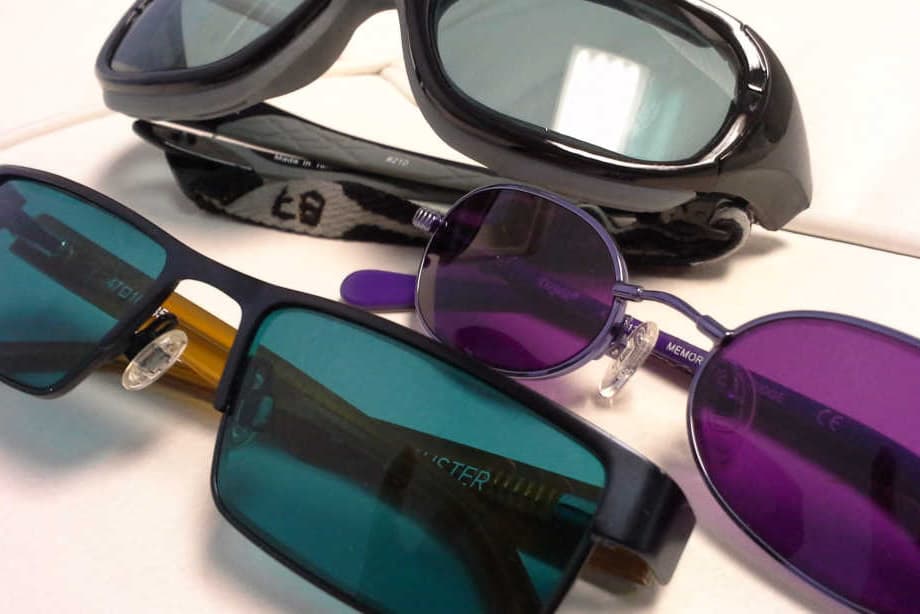
Over 100 scientific studies on the topic have established a hereditary component of the disorder1-3, a number of biochemical markers for problems associated with Irlen Syndrome4-6, and differences in brain function between individuals with and without the condition7-11. Precision-tinted colored filters have been found to normalise abnormal brain activity and eliminate issues with print clarity and stability, physical symptoms, and light sensitivity associated with the condition12-21. Although originally thought to be associated solely with reading problems, research has linked visual processing difficulties to a range of other disorders, including ADHD (attention deficit hyperactivity disorder), ASD (autism spectrum disorders), learning disabilities, anxiety and certain emotional and psychological issues22-24. Visual processing challenges also overlap with other neurological conditions, such as migraines and tourette’s8, 25.