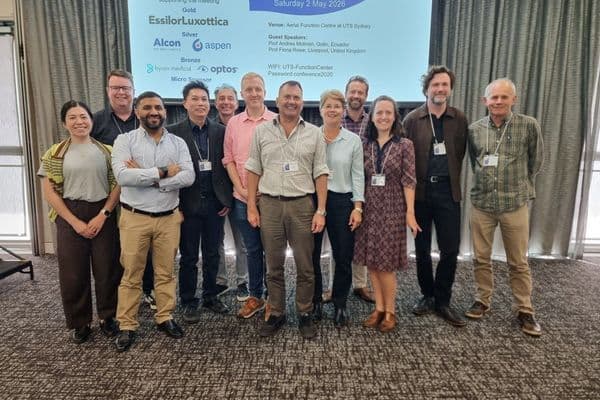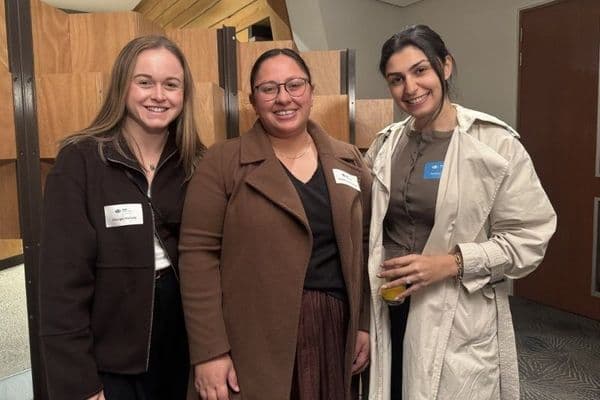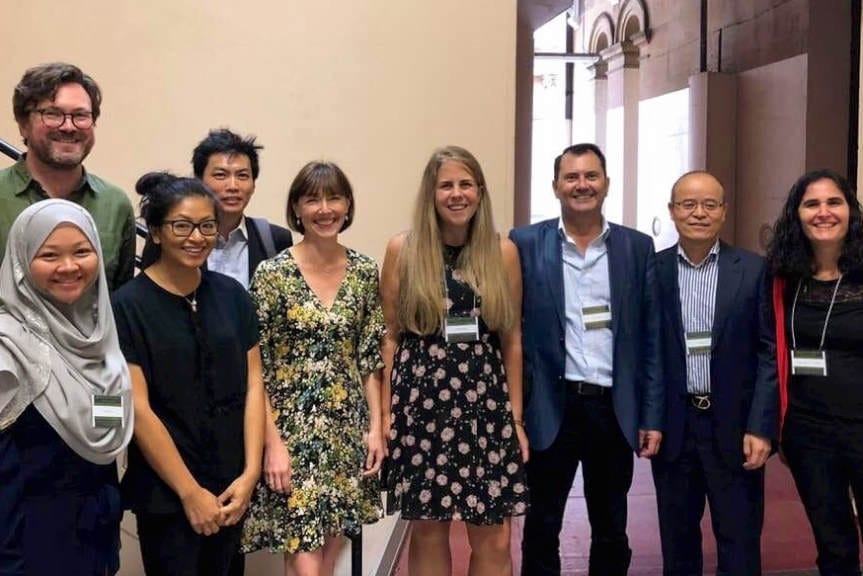
This year’s meeting of the Australian and New Zealand Strabismus Society (ANZSS), better known as the Squint Club, was held at the Sydney Eye Hospital, the oldest hospital in Australia dating back to 1788. Set in the historic sandstone Victorian building with ornate metal balustrades and stained-glass windows, it was a magnificent juxtaposition of the old and the new with the vibrant and modern city of Sydney being a few steps away.
This year’s event was well attended by 129 participants including ophthalmologists, fellows, registrars and orthoptists from mainly the Australasia region and one delegate from China. International guest speakers included: Dr Ramesh Kekunnaya, head of paediatric ophthalmology, strabismus and neuroophthalmology at LV Prasad Eye Institute in Hyderabad, India, and a member of the executive bureau of the World Society of Paediatric Ophthalmology and Strabismus; and Daisy Godts, chief orthoptist at the University of Antwerp in Belgium and council member of the International Orthoptic Association.
The 2018 meeting kicked off with a welcome address by Dr Craig Donaldson, president of ANZSS, followed by a series of complex strabismus case presentations with an expert panel discussion consisting of Dr Kekunnaya, Godts, Dr Donaldson (Sydney), Associate Professor James Elder (Melbourne) and Dr Wendy Marshman (Melbourne). This session was filled with “what to do”, “what not to do” and “what I should’ve done instead”, carried out in convivial manner where even senior ophthalmologists shared their learning pitfalls.
Dr Kekunnaya shared his experience in performing strabismus surgery under topical anaesthesia which is usually reserved for adult squint cases. It can be performed successfully with minimal discomfort, but patient selection is key, he said. Patients who can comfortably tolerate a cotton tip applicator soaked with topical anaesthesia on their conjunctival limbus are suitable candidates. Effective haemostasis can be aided by vascular vasoconstriction with topical brimonidine or phenylephrine at the beginning of surgery. Topical anaesthesia surgery can be useful in re-operation cases within 10 to 15 days of the first surgery, for example in cases of a slipped muscle, he added.
Motility examination of neurological patients is one of the least understood and inadequately performed ocular assessments for most ophthalmology trainees. This was succinctly covered in a practical and step-by-step manner by Daisy Godts in her refreshing back-to-the-basics lecture.