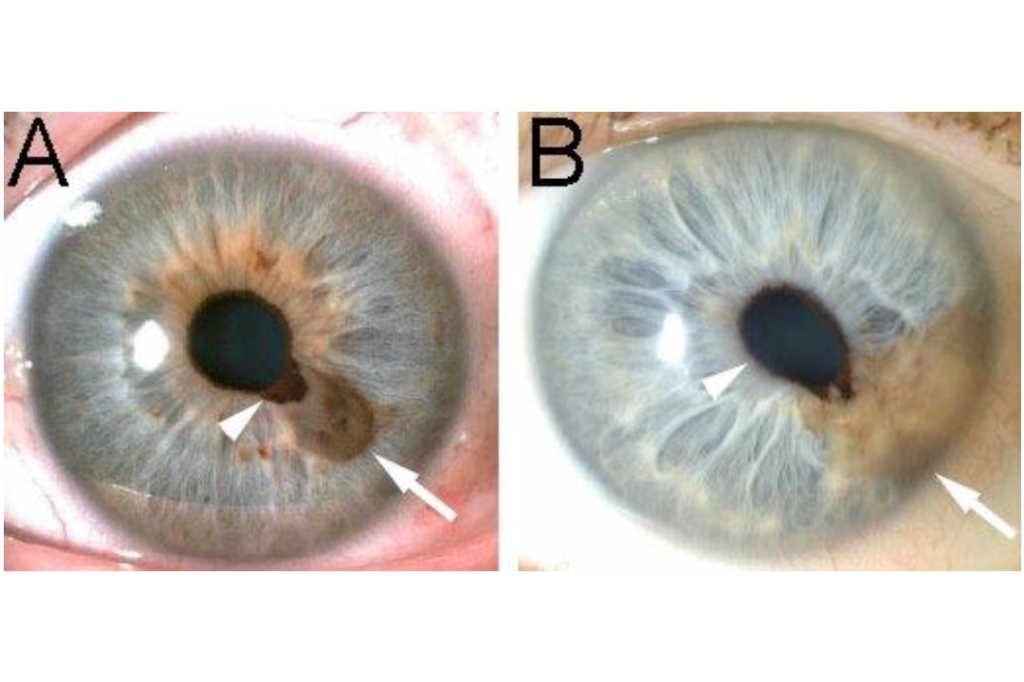
The healthy human iris consists of five layers: the anterior-border layer, stroma, iris sphincter muscle, iris dilator muscle and the iris pigment epithelium (IPE)1. The anterior border layer is made up of fibroblasts and contains melanocytes1. Underneath that is the iris stroma, a layer that contains a loose mesh of collagen fibres, melanocytes, fibroblasts and clump cells1. This is followed by two muscular layers: 1) the iris sphincter muscle, which surrounds the pupil in a concentric manner and is responsible for pupil constriction, and 2) the iris dilator muscle (consisting of fibres that are arranged radially around the pupil), which is responsible for the dilation of the pupil2. The most posterior layer, the IPE, is dense with melanin-rich melanocytes. The iris is responsible for modulating light and accommodation. Any compromise to the iris can result in symptoms including photophobia, glare, reading difficulty and altered contrast sensitivity. Iris appearances also have a cosmetic effect, varying from one individual to another and can provide evidence to underlying systemic diseases2.
Sign up to keep reading
Create a free Member account at NZ Optics to read this article and more.
- Read all Member articles
- Full digital magazine archive