In recent years there has been growing interest in the potential link between a number of modifiable lifestyle risk factors and the development of dry eye disease, the goal being to inform cost-effective disease prevention strategies at the population level. This is important, since the public health and financial burden of dry eye disease, which is already high, is projected to rise due to ageing populations worldwide1. However, dry eye disease is also increasingly recognised to be a highly diverse and heterogenous condition2 and the risk factor profile may differ between the etiological subtypes of aqueous tear deficiency and evaporative disease. To date, there has been limited scientific literature investigating the impact of modifiable lifestyle risk factors on these disease subtypes1.
The Royal Society Summer Science Exhibition (RSSSE) is a prestigious cutting-edge research dissemination event held over the course of a week in London each year. Professor James Wolffsohn, Aston University, UK, in collaboration with members from the Ocular Surface Laboratory at the University of Auckland, won a hotly contested place at the exhibition. As well as presenting their latest research, they took the opportunity to conduct a study to explore some of the recognised gaps in the current literature on dry eye disease epidemiology, including demographic and lifestyle risk factors of aqueous deficient and evaporative dry eye disease3.
Is there a dry eye in the house?
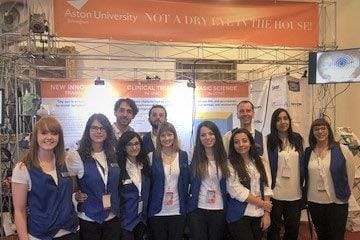
The Dry Eye exhibit at RSSSE was manned by Aston University staff and students, plus Professor Jennifer Craig, during her research and study leave pre-Covid-19. Visitors to the exhibit were recruited to complete questionnaires on lifestyle factors and dry eye symptomology, as well as assessment of ocular surface and tear film parameters using the Oculus Keratograph 5M. The diagnosis and subtype classification of dry eye disease was then determined according to the rapid non-invasive dry eye assessment algorithm, which has previously been demonstrated to exhibit high levels of diagnostic agreement with the global consensus TFOS DEWS II criteria4.
Overall, the study recruited a total of 1,125 visitors, ranging in age from five to 90 years. Dry eye disease was detected in 38% of participants, with aqueous deficient dry eye disease present in 14%, and evaporative dry eye disease diagnosed in 30%. Multivariate regression analysis was then conducted to identify independent risk factors of the two dry eye disease subtypes.