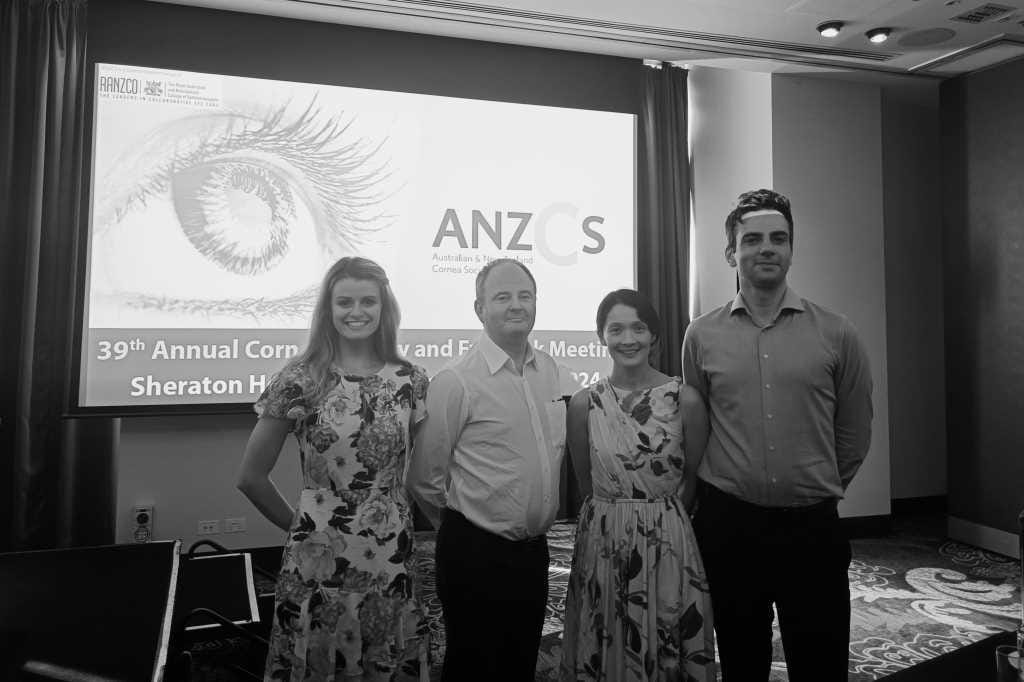
A scorching midweek conference alongside the Melbourne Moomba festival was perfectly timed by Australia New Zealand Corneal Society’s (ANZCS’) conference organisers A/Prof Elaine Chong, Dr Elsie Chan, Dr Dermot Cassidy and Dr Nathan Wong. The annual congregation of corneal and eye bank specialists took place at the stunning Sheraton Hotel and the two-day programme was jam-packed full of innovation, discussion and expertise.
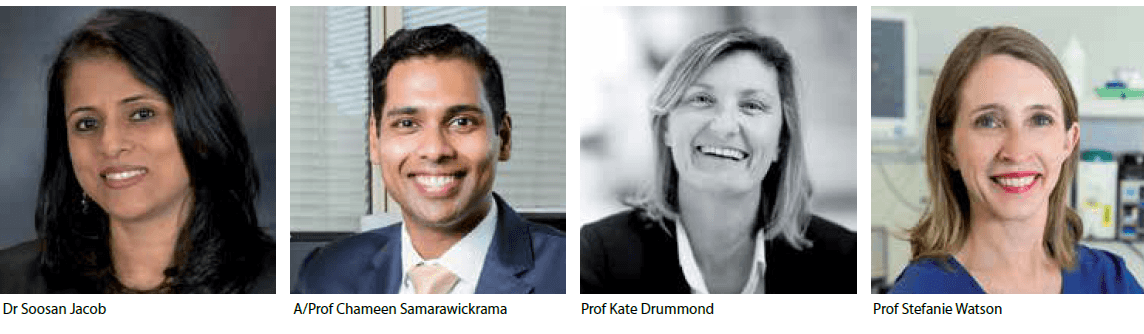
Thursday morning’s first session started with Auckland’s Dr Mo Ziaei presenting on the financial burden of keratoconus in New Zealand. Ophthalmological powerhouse Dr Soosan Jacob, the director and chief of India’s Dr Agarwal’s Refractive and Cornea Foundation, followed online having had her visa application declined. She did not appear at all concerned that this meant discussing corneal allogenic intrastromal ring segments (CAIRS) at 4am local time! Her fantastic breakdown of this new type of corneal graft explained how it is improving visual outcomes for keratoconics. It involves utilising stromal tissue – usually excess tissue from Descemet's stripping automated endothelial keratoplasty (DSAEK) or Descemet's membrane endothelial keratoplasty (DMEK) – cutting it into strips and inserting it within the corneal stroma using a femtosecond laser-cut channel. These strips of tissue thicken the host cornea at the area of keratoconic thinning and steepening, improving visual acuity. The results presented by Dr Jacob show incredible promise and the technique has now been adopted by Queensland-based refractive eye surgeons Dr Brendan Cronin and Dr David Gunn. They went on to discuss their programmed CAIRS calculator, which allows other corneal surgeons to calculate the correct size and shape of tissue to implant during surgery. Long-term visual outcomes have not yet been reported, but this is a very interesting area to watch and it was fascinating to see such excellent results.
Next came a series of updates related to endothelial surgery. A/Prof Chameen Samarawickrama from the University of Sydney discussed a novel device he invented for labelling DMEK tissue, involving a number 7 trephine to ensure it’s always clear that the tissue is placed the correct way in the anterior chamber. Dr Jelena Kezic from Lions Eye Bank of Western Australia presented her data on the amount of endothelial cell loss after eye bank tissue preparation. Her key finding was that endothelial loss is much less in penetrating keratoplasties compared with partial thickness grafts such as DMEKs or DSAEKs. Dr Elsie Chan, director of ophthalmology at Melbourne’s Royal Victorian Eye & Ear Hospital, shared initial data on descemetorhexis without endothelial keratoplasty (DWEK) surgery for Fuch’s endothelial dystrophy, which involves a 4mm central descemetorhexis. Initial results show 47% of cases cleared completely with the addition of ripasudil 0.4% eye drops.