A night at the museum…
An Eye Institute seminar covered interpreting OCT for intraocular tumours and macular disease, photobiomodulation for dry AMD, pterygium management, retinal haemorrh

An Eye Institute seminar covered interpreting OCT for intraocular tumours and macular disease, photobiomodulation for dry AMD, pterygium management, retinal haemorrh

A recent diagnosis of Parkinson’s disease has added an unexpected dimension to my personal and professional journey.

An optometrist recounts her experience on an Eyes4Everest outreach trip to Nepal's Annapurna region, providing eyecare at high-altitude

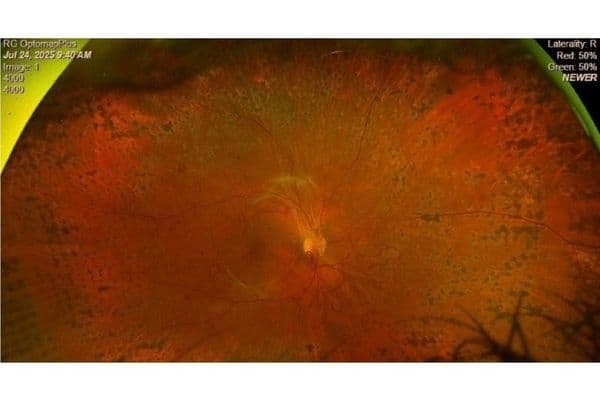
Hamilton-based vitreoretinal specialist Dr Stephen Guest explains how Optos’ ultra-widefield imaging technology is making a difference to his practice and his patients. By Lesley Springall for Optos.

This article explains how buyers value an optometry practice for sale, focusing on adjusted EBITDA. It details key adjustments and levers like profitability and multiple that drive the

Professionalism for dispensing opticians encompasses clinical competence, interpersonal skills, and personal and practice presentation. Upholding these standards builds reputation, improves workplace relationships, and enhances business opportunities.

Dublin advanced nurse practitioner Diana Malata explains how Ireland's nurse-led crosslinking (CXL) programme has accelerated care for keratoconus patients,

This article reviews advances in paediatric blepharokeratoconjunctivitis treatment, the cost-effectiveness of keratoconus screening and crosslinking

If you have impostor syndrome, you're not alone!

Revisyon's developer responds to NZ eyecare professionals’ concerns about its safety and effectiveness

This month, Drew Jones covers Eye Institute’s Drs Peter Hadden’s and Sophie Hill’s responses to optometrists’ questions about vitrectomy recovery and counselling, anti-VEGF choices and emerging management options for geographic atrophy secondary to AMD. Answers have been abridged.

Perceived ‘distortion’ in spectacle wear is not a single entity but a combination of prismatic effects, magnification, off-axis aberrations and position-of-wear changes. Patients often mislabel blur, tilt, or instability as distortion. Accurate clinical management depends on distinguishing true spat

-1.png&w=1920&q=75)